

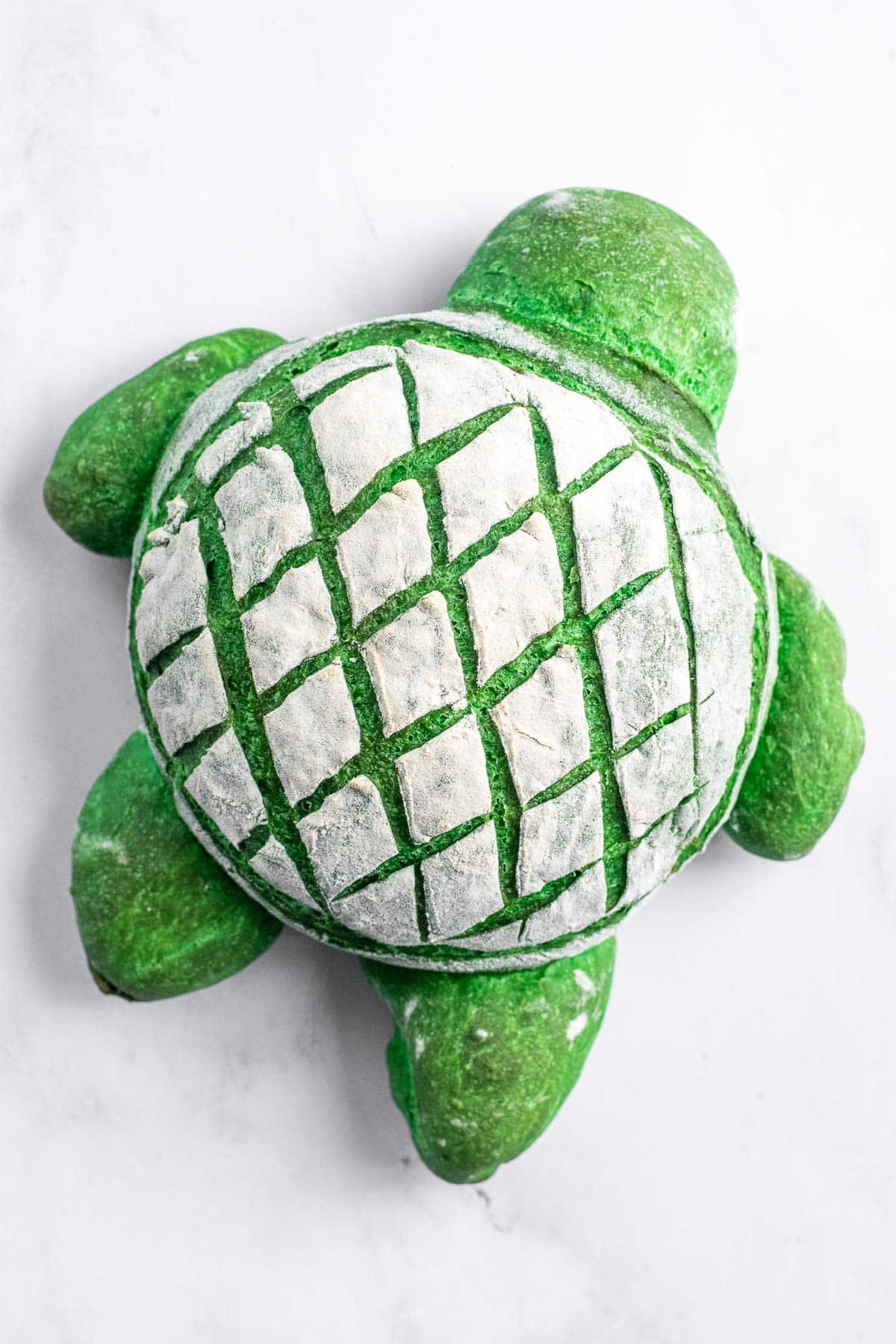
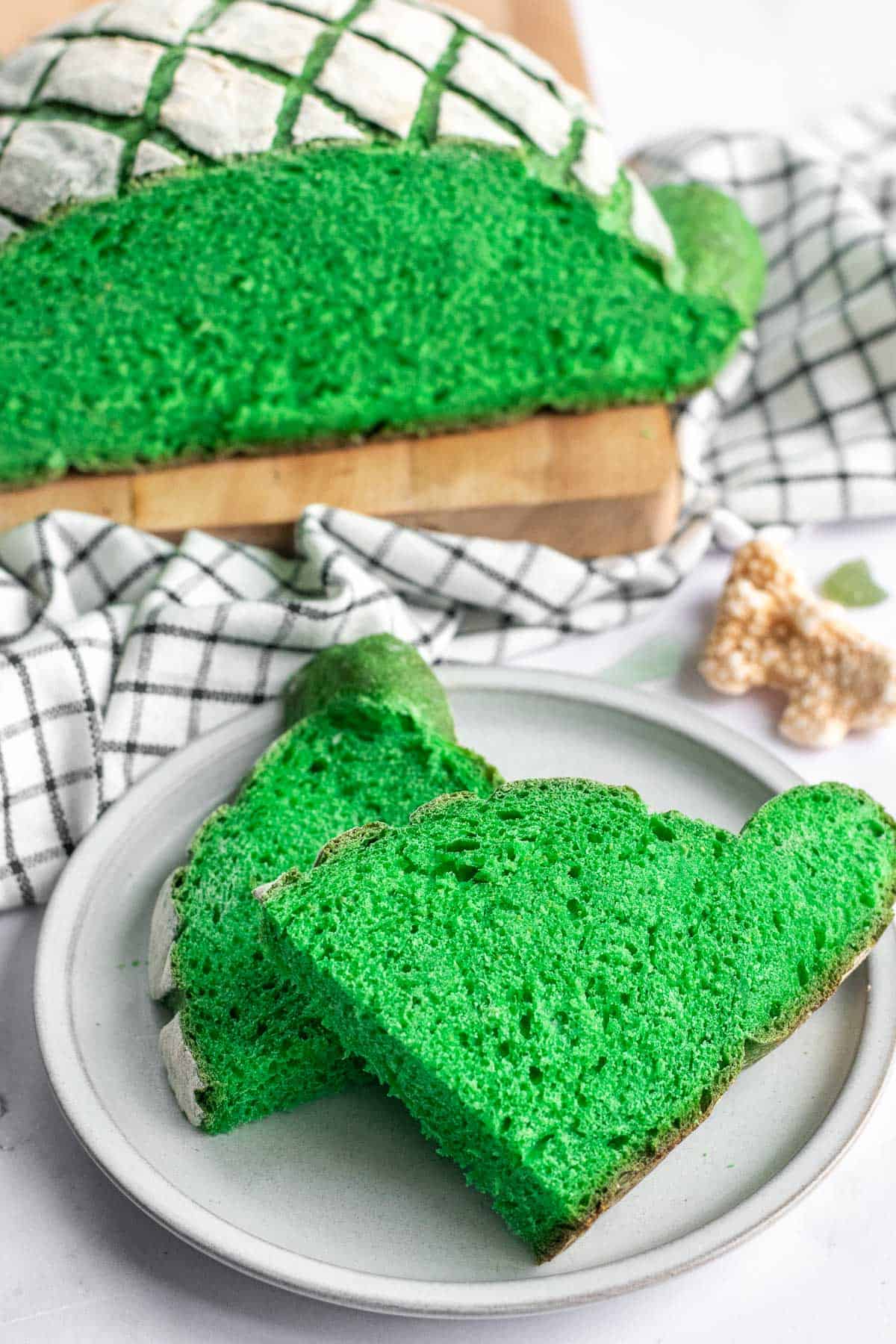
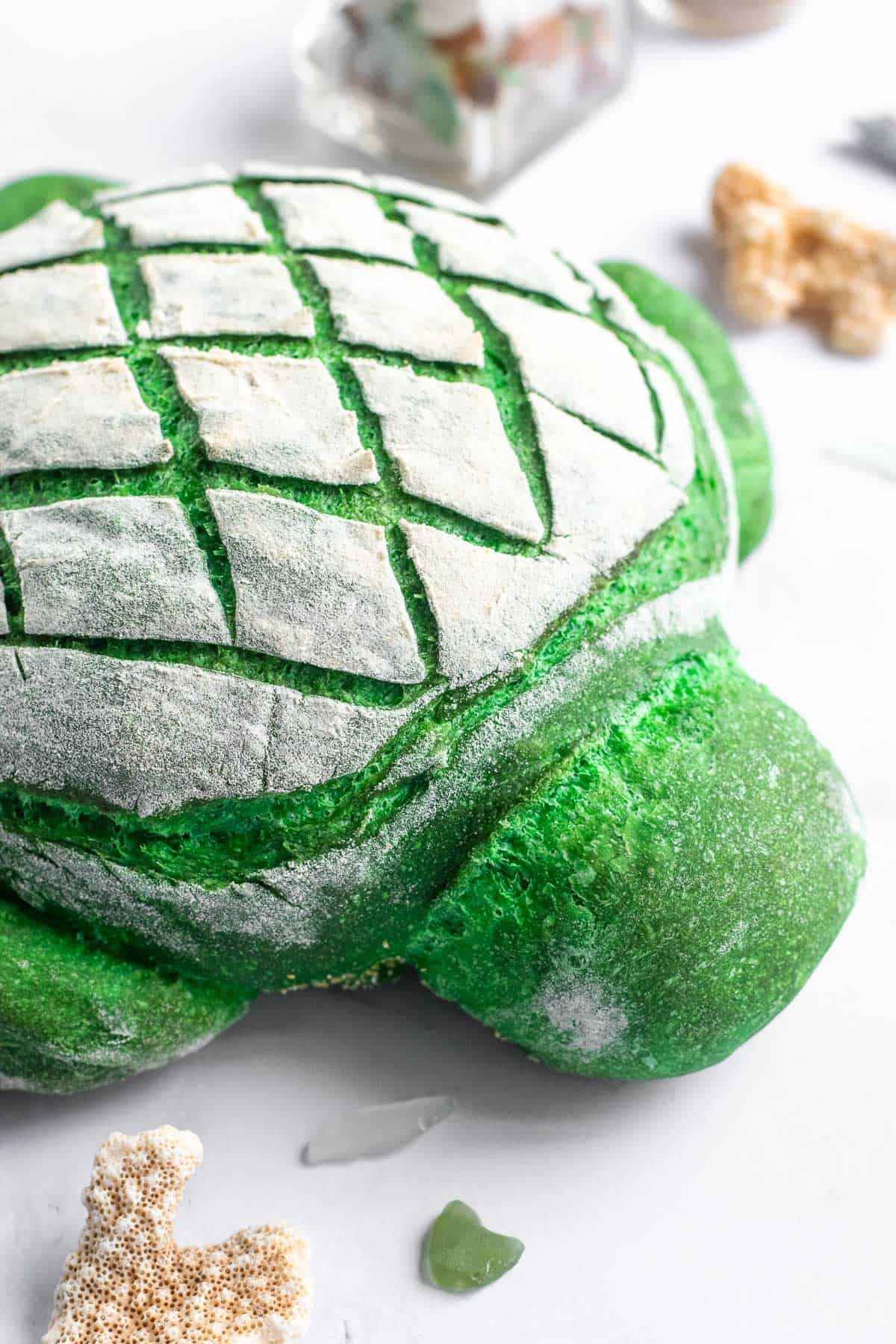
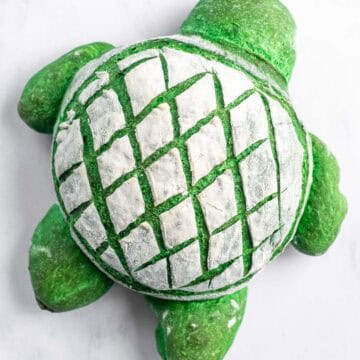
This adorable Dutch oven turtle bread is made with just four simple ingredients, including gel-based food dye for a vibrant green color that doesn't turn brown as it bakes. And I've included step-by-step photos for scoring the shell & shaping the arms, legs, and head.
This Might Be the Cutest Loaf I've Ever Pulled From My Dutch Oven
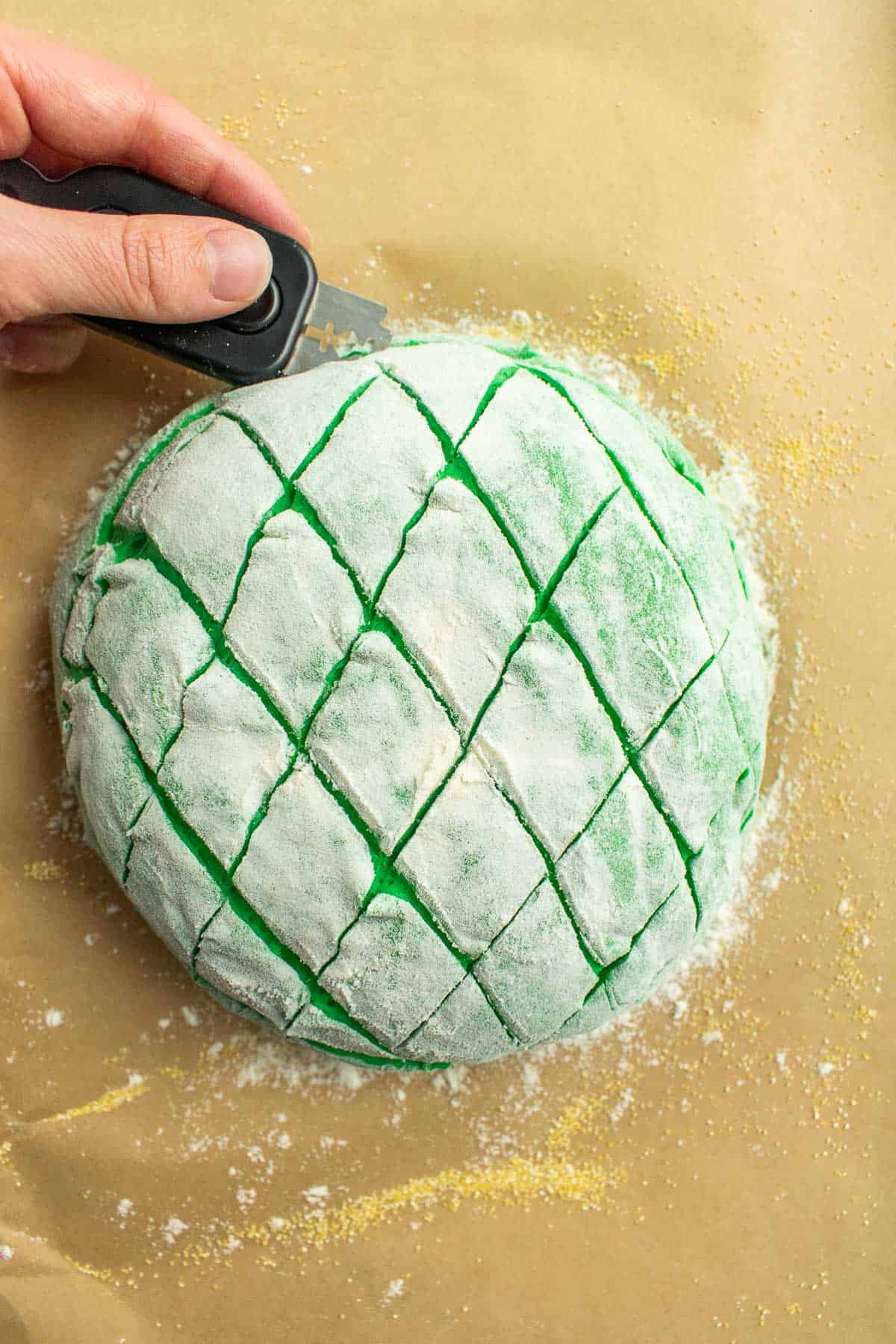
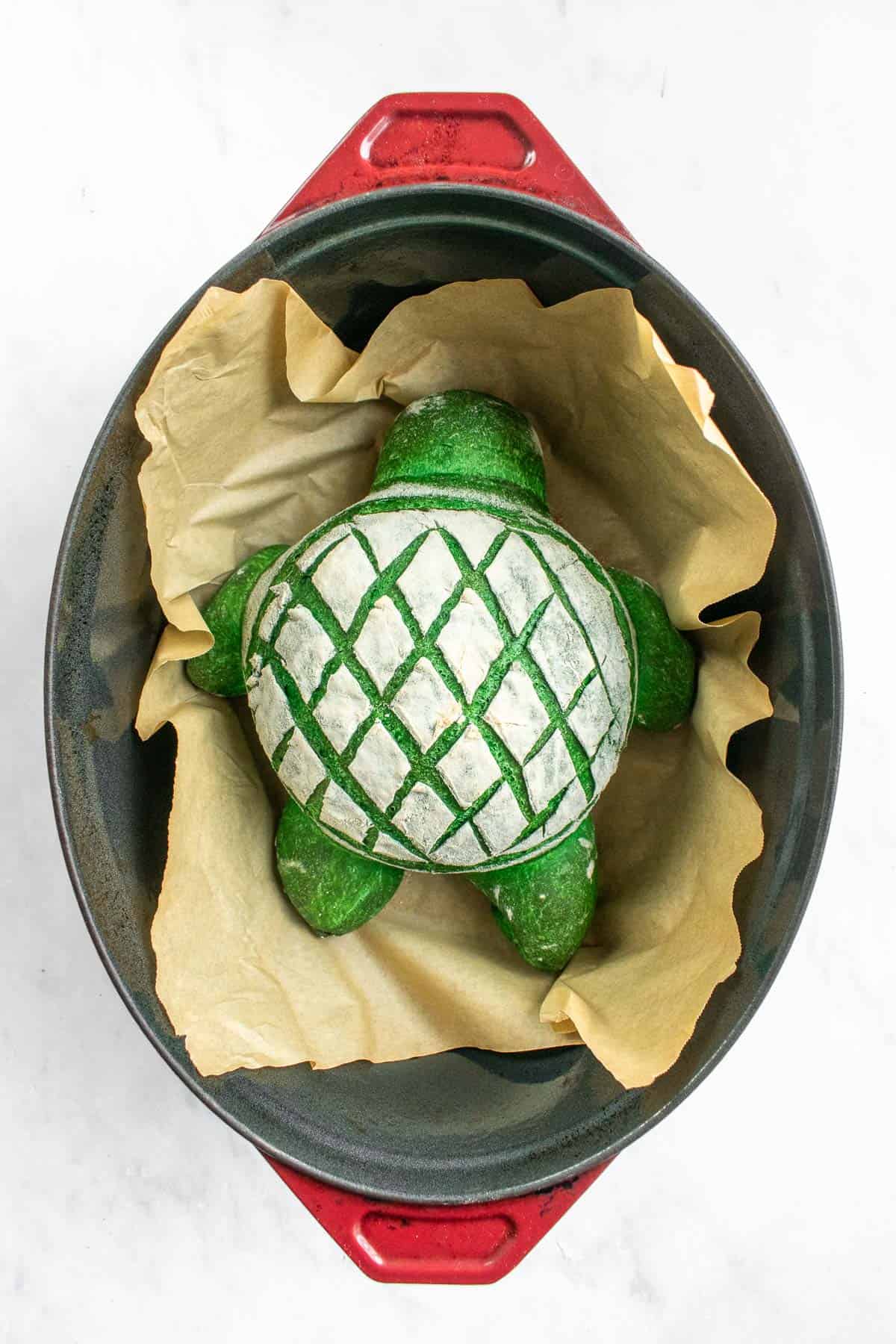
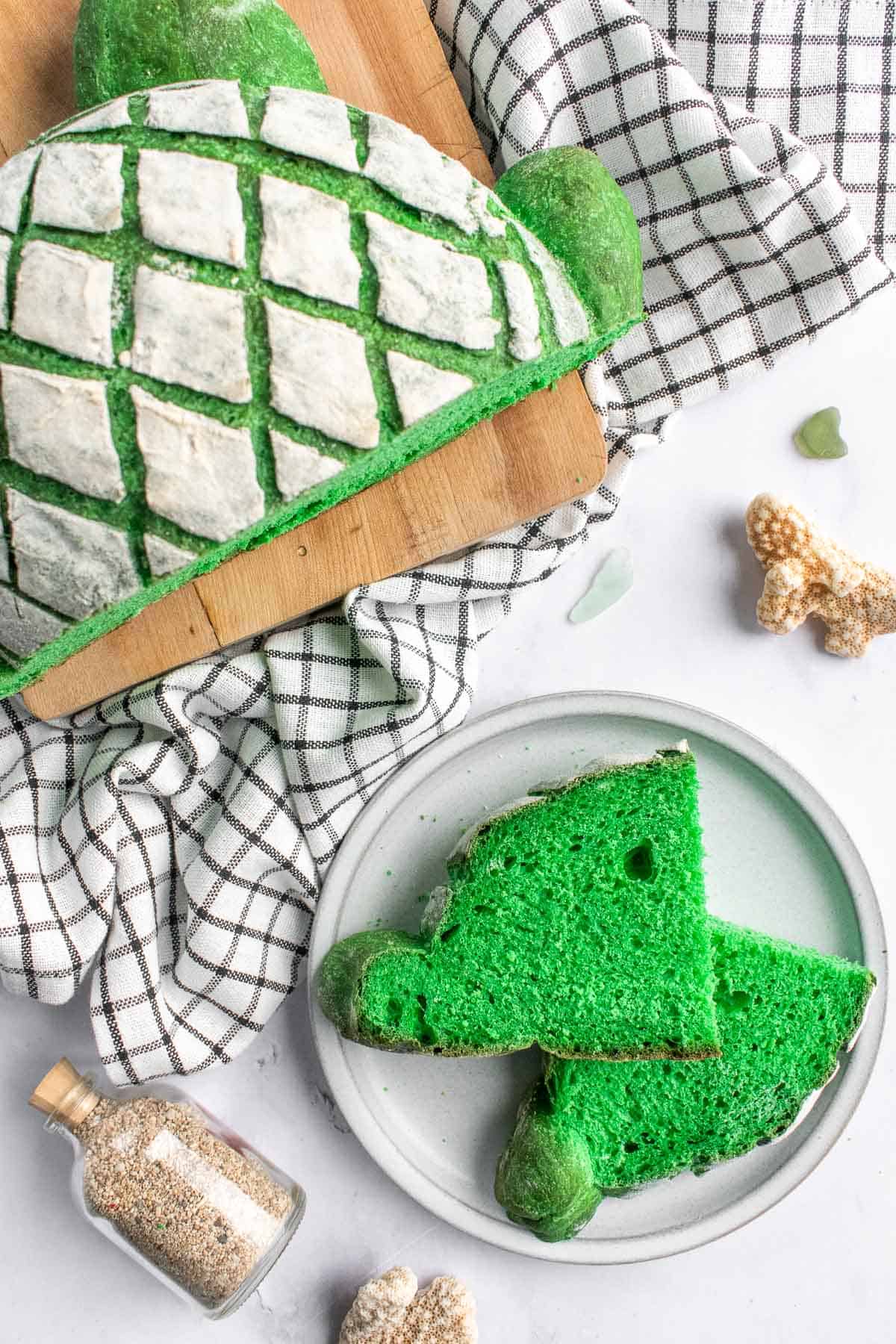
I've been experimenting with dyed "bread art" recently (like my pink heart bread), and I wanted to make a cute green turtle shaped loaf for my mom, since she loves turtles. I used gel-based green food coloring to get a deep, vibrant color that doesn't turn dull or brown as it bakes. After the dough rises, I divide it into two portions; one for the main body and one for all the appendages & head. The turtle shell gets a simple cross-hatch decorative scoring pattern on top, with a deeper expansion score around the edge. Then the cute little arms, legs, and head get shaped and tucked slightly underneath the shell so nothing detaches as it bakes.
Now, I gotta tell you that this recipe took me half a dozen tests to get right! Needless to say, we've been eating a lot of green bread in my home the past few weeks. At first, my turtle bread turned out "leathery" (my mom's words, not mine). I increased the hydration to 70% for an open, airy texture, but the dough was wayyy too sticky. So I added a quick autolyse step, which helps hydrate the flour before adding the salt & kneading the dough. It was closer to what I wanted, but the arms and legs were still difficult to shape, so I reduced the hydration to 60%, which is this loaf's sweet spot for a crispy crust, soft interior, and easy shaping.
Technically, an autolyse is just flour + water, but since we're only letting it rest for 30-60 minutes and we're using instant yeast, I found that it actually works better to add the yeast to the autolyse. It incorporates more evenly and rises quicker than trying to sprinkle it on top, especially since this dough isn't quite as hydrated as other artisan breads.
Let's Bake Turtle Bread Together!
For the full step-by-step directions, scroll down to the recipe card.

Decorative Bread Scoring
If you want to learn more about the techniques and tools I use to score bread, watch my YouTube bread scoring FAQ's video!
The Secret to Bread Designs That Actually Hold Their Shape
- Avoid overproofing by shaping & scoring quickly. If I'm worried that my dough is going to proof too long, which can cause it to bake flat, I'll stick it in the fridge for the last 15 minutes of the proofing time, which slows yeast fermentation.
- Don't score too shallow or the shell design will disappear. And don't score too deeply, or else there will be too much expansion. I aim for ¼-inch deep on the cross-hatch, and ½-inch deep around the edge of the shell to control the rise.
Turtle Bread (in the Dutch Oven)
developed & tested by:

Equipment
Ingredients
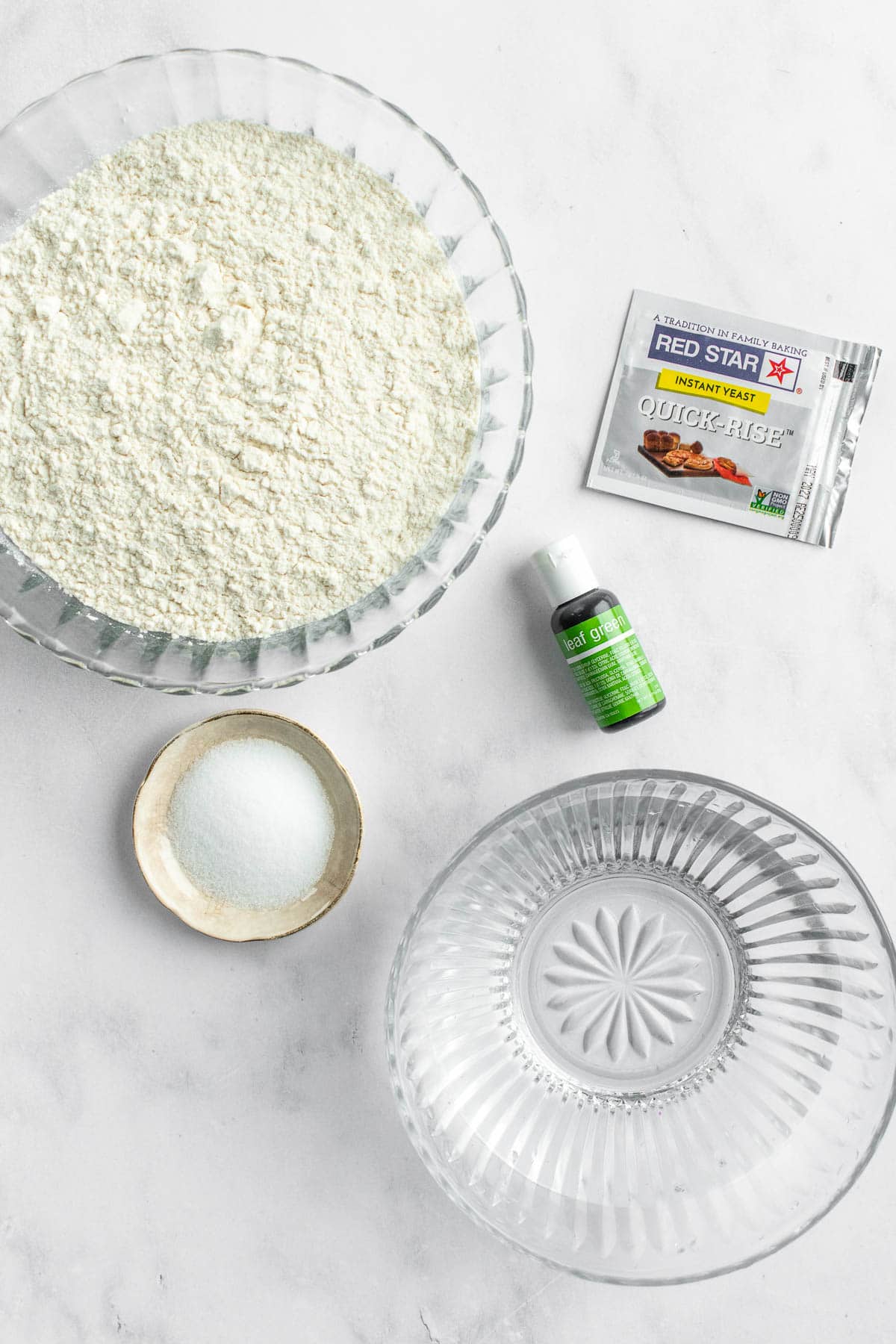
- 1 ⅓ cups warm water (between 100-115F or 38-46°C)
- green gel-based food dye (see note below)
- 4 ½ cups bread flour
- 2 ¼ teaspoons instant yeast (one packet)
- 1 ½ teaspoons salt (use table salt or fine sea salt)
Instructions
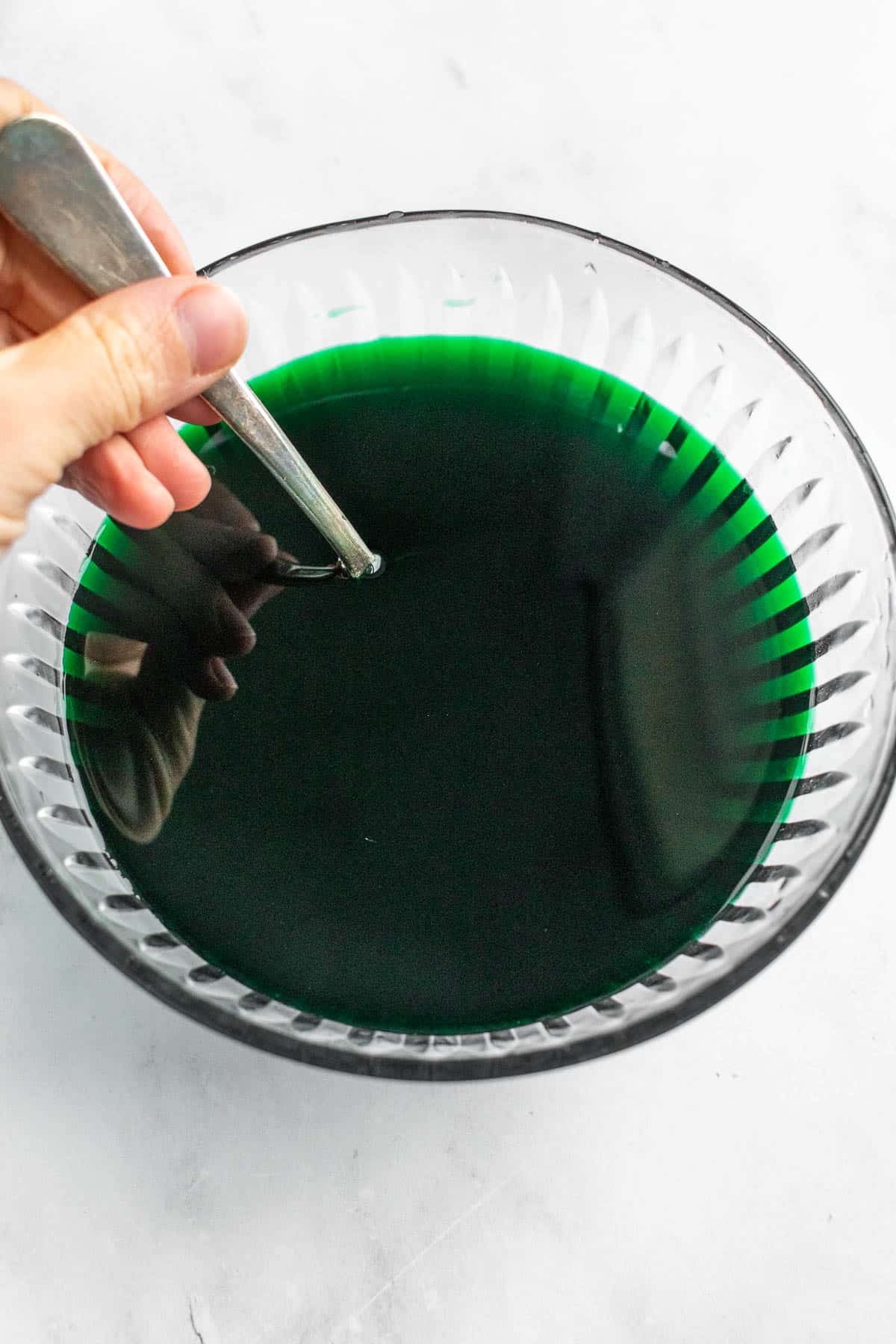
- Color: In a large mixing bowl, mix the warm water with green food coloring until it's dissolved. Add enough coloring to reach a strong dark green, since the color will get diluted once it's added to the dough.
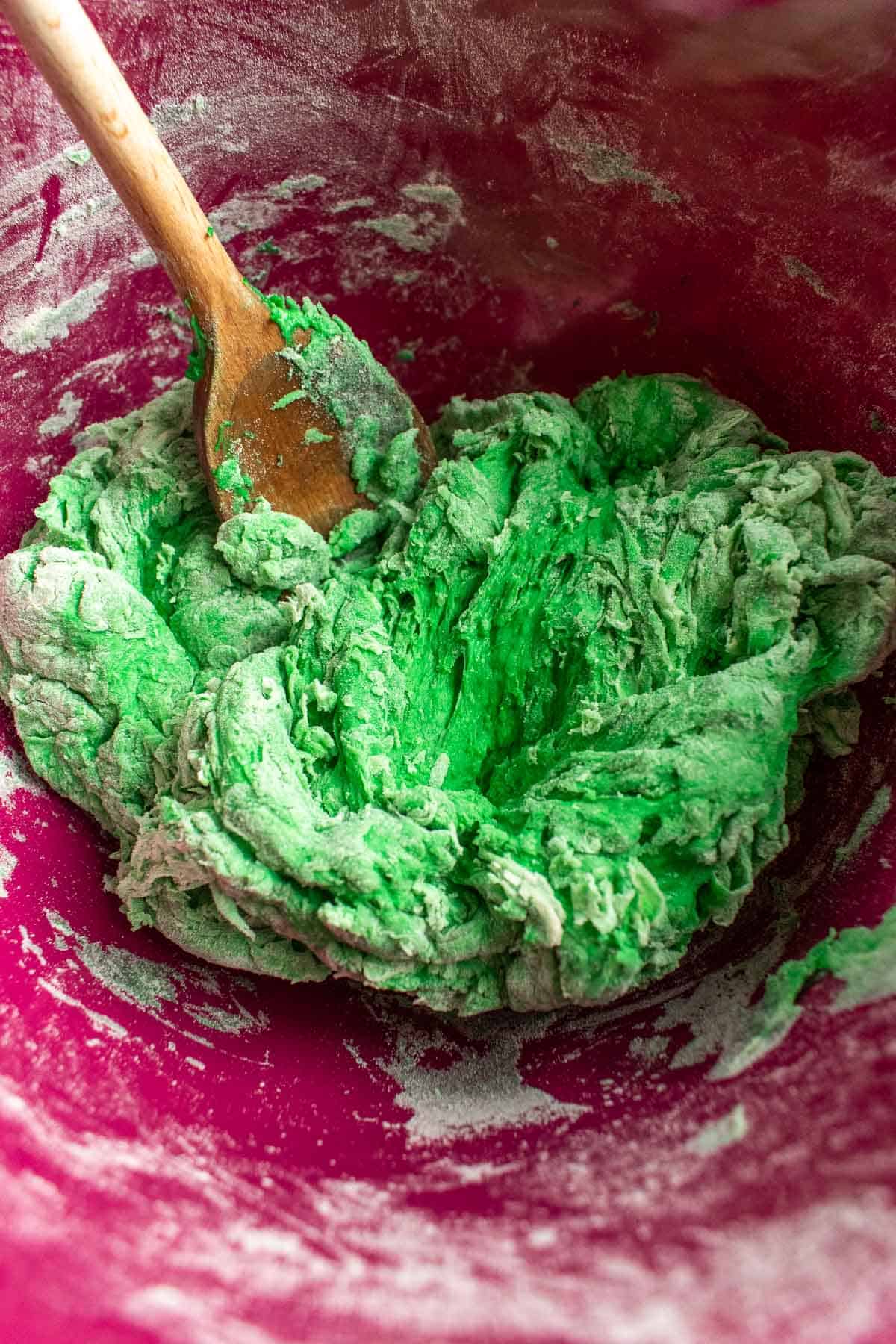
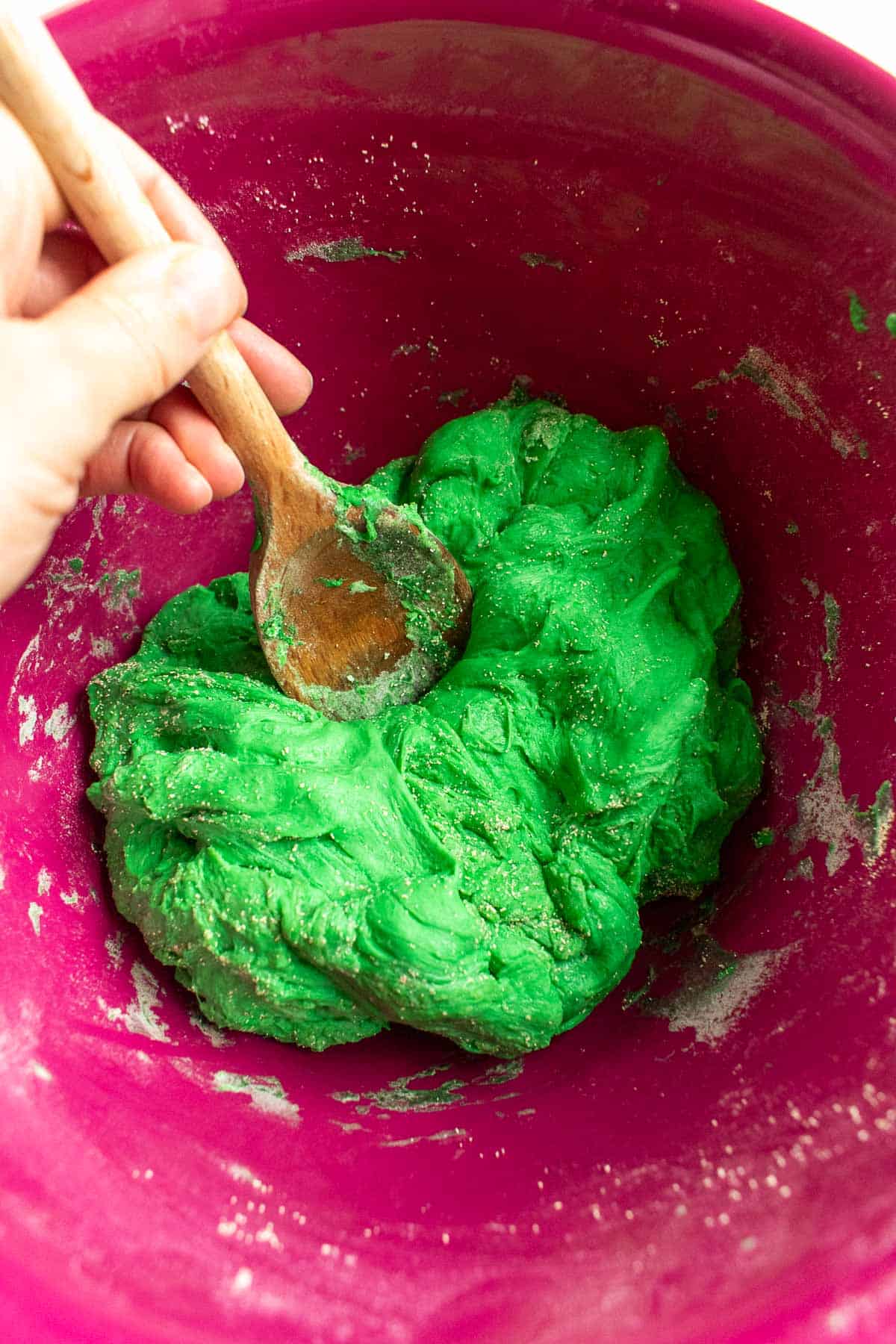
- Autolyse: Add the flour and yeast to the dyed water and mix until it forms a dense dough. (It'll look really dry with lots of loose flour in the bowl at first, but don't worry, just keep mixing for a couple minutes with a large spoon, and it'll start to come together as the flour hydrates into a dense, shaggy dough.)
- Cover the bowl with plastic wrap or a dinner plate (to trap moisture & warmth) and set aside at room temperature for anywhere from 30 to 60 minutes.
- Sprinkle the salt on top and mix for a minute to combine everything. (It'll feel dense, so I find it easiest to mix the dough with my hand by squeezing it between my fingers.
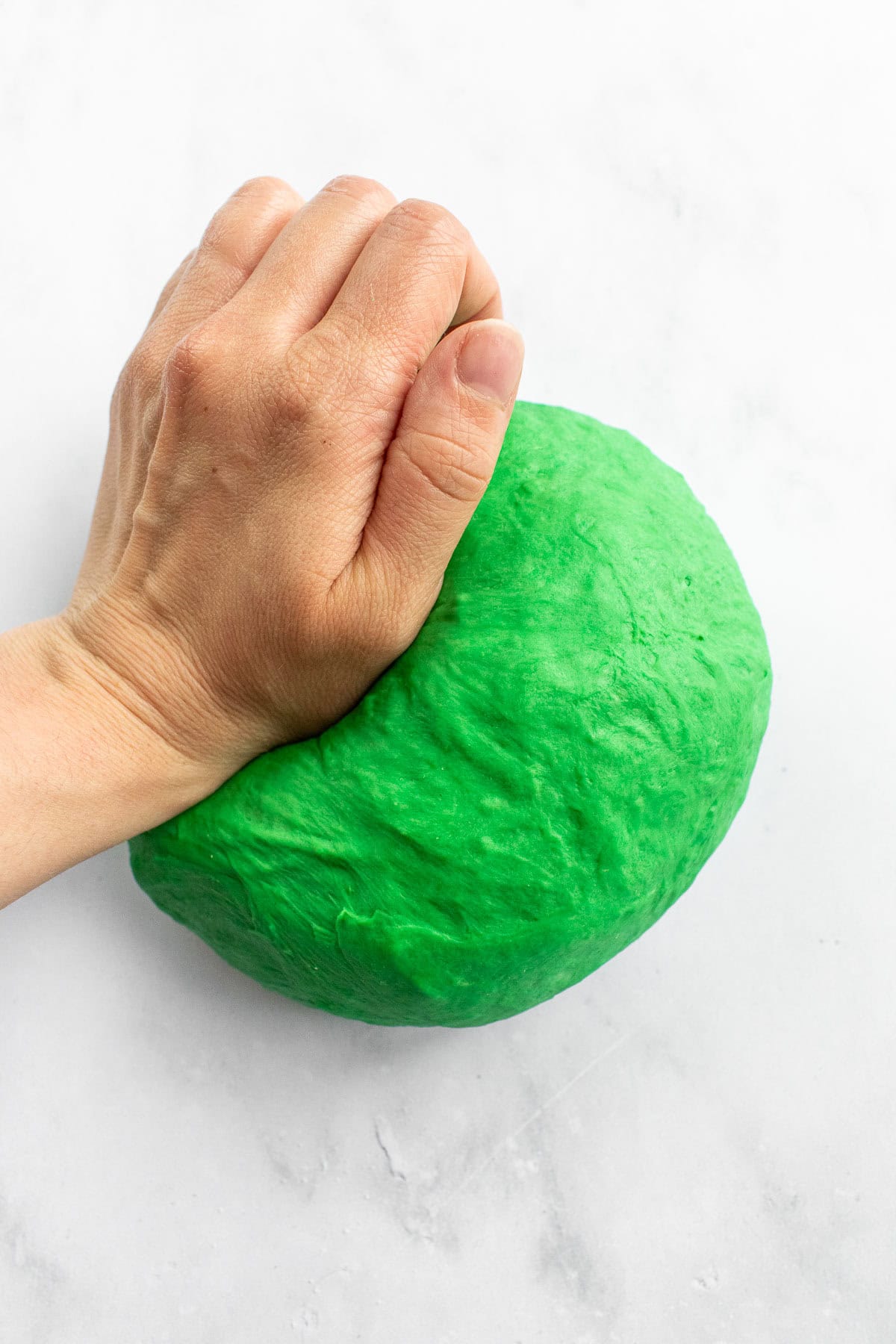
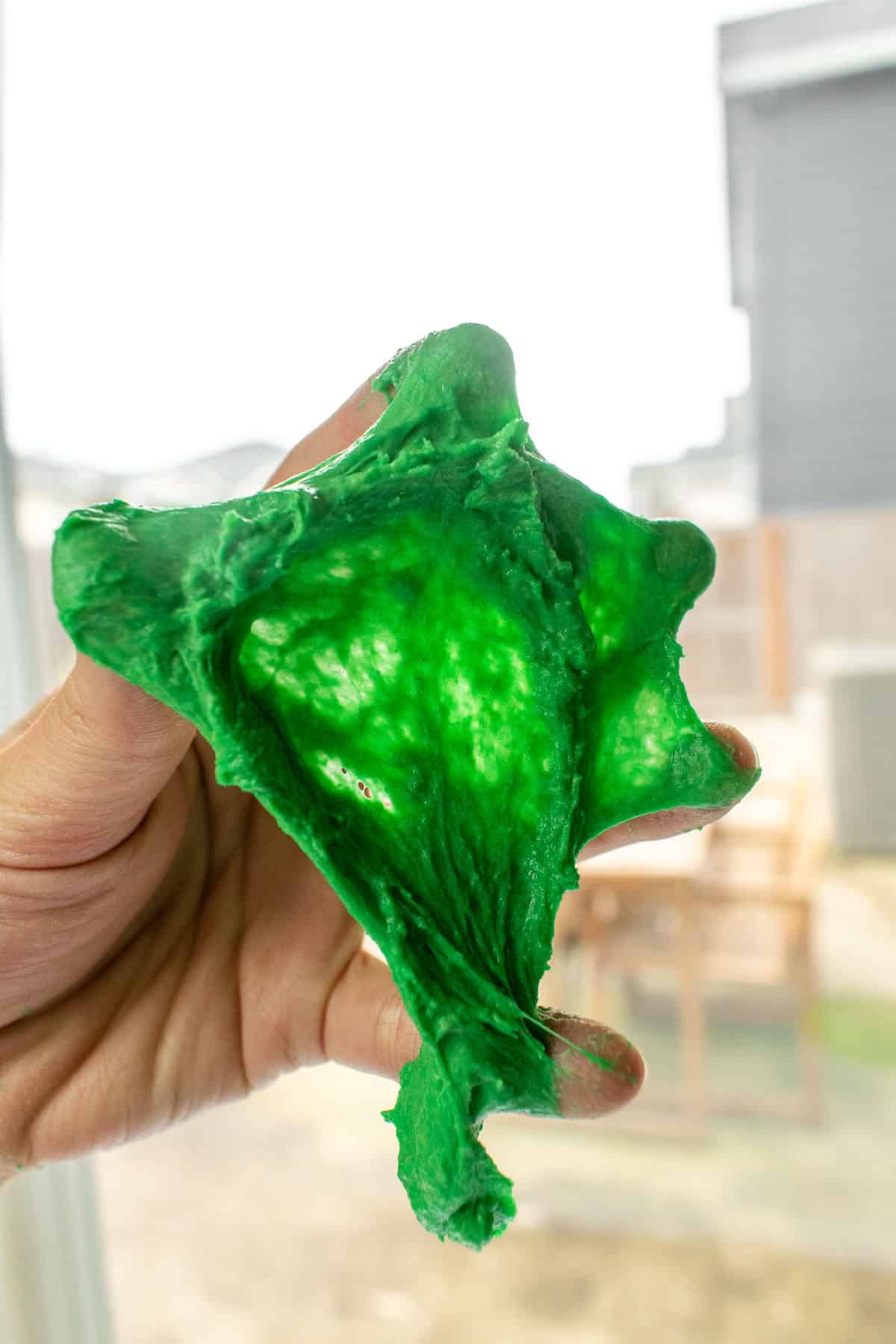
- Knead: On a clean surface, knead the dough for about 8-10 minutes by hand (or about 5-7 minutes in a stand mixer with a hook attachment on the lowest speed), until the dough is stretchy and elastic.
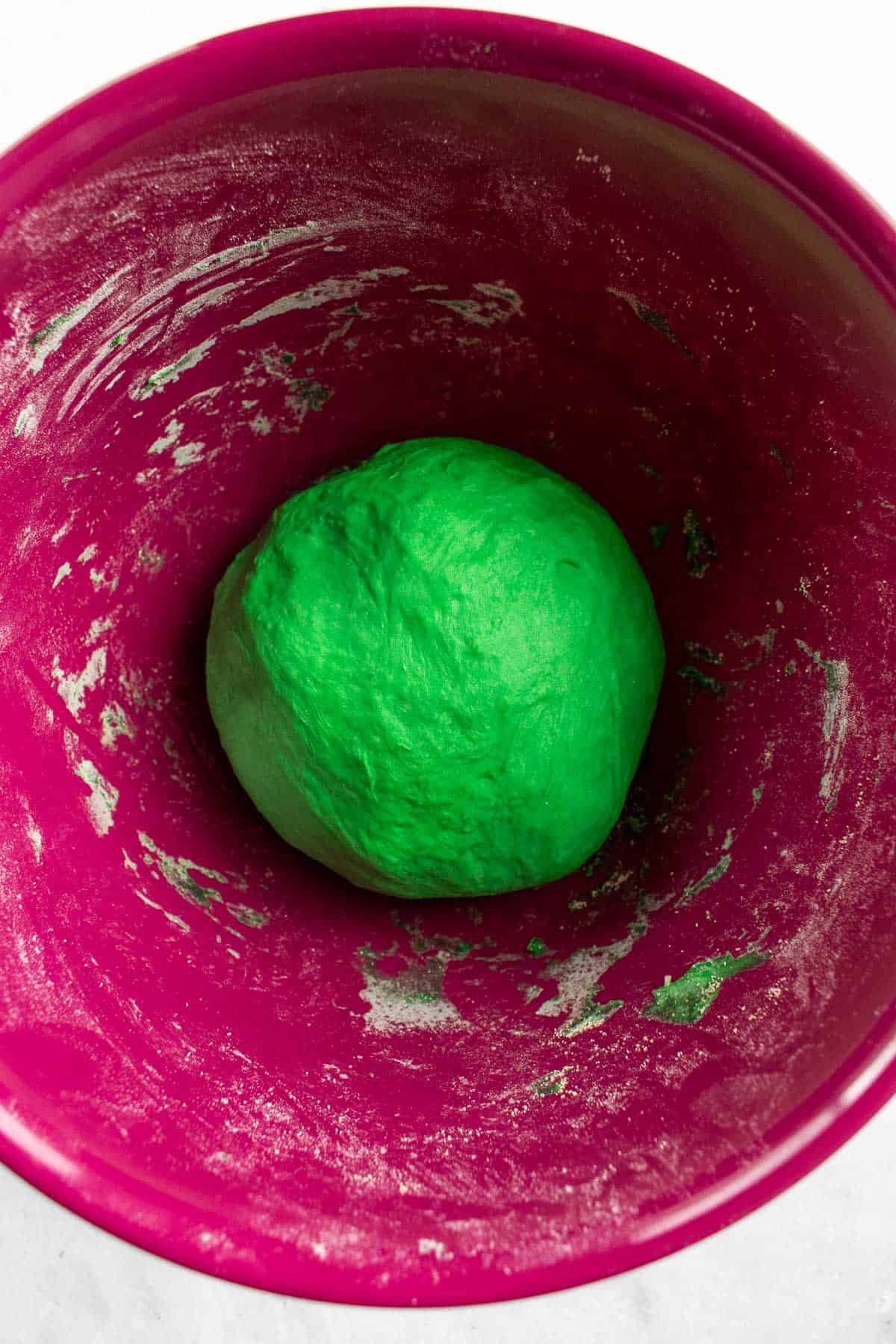
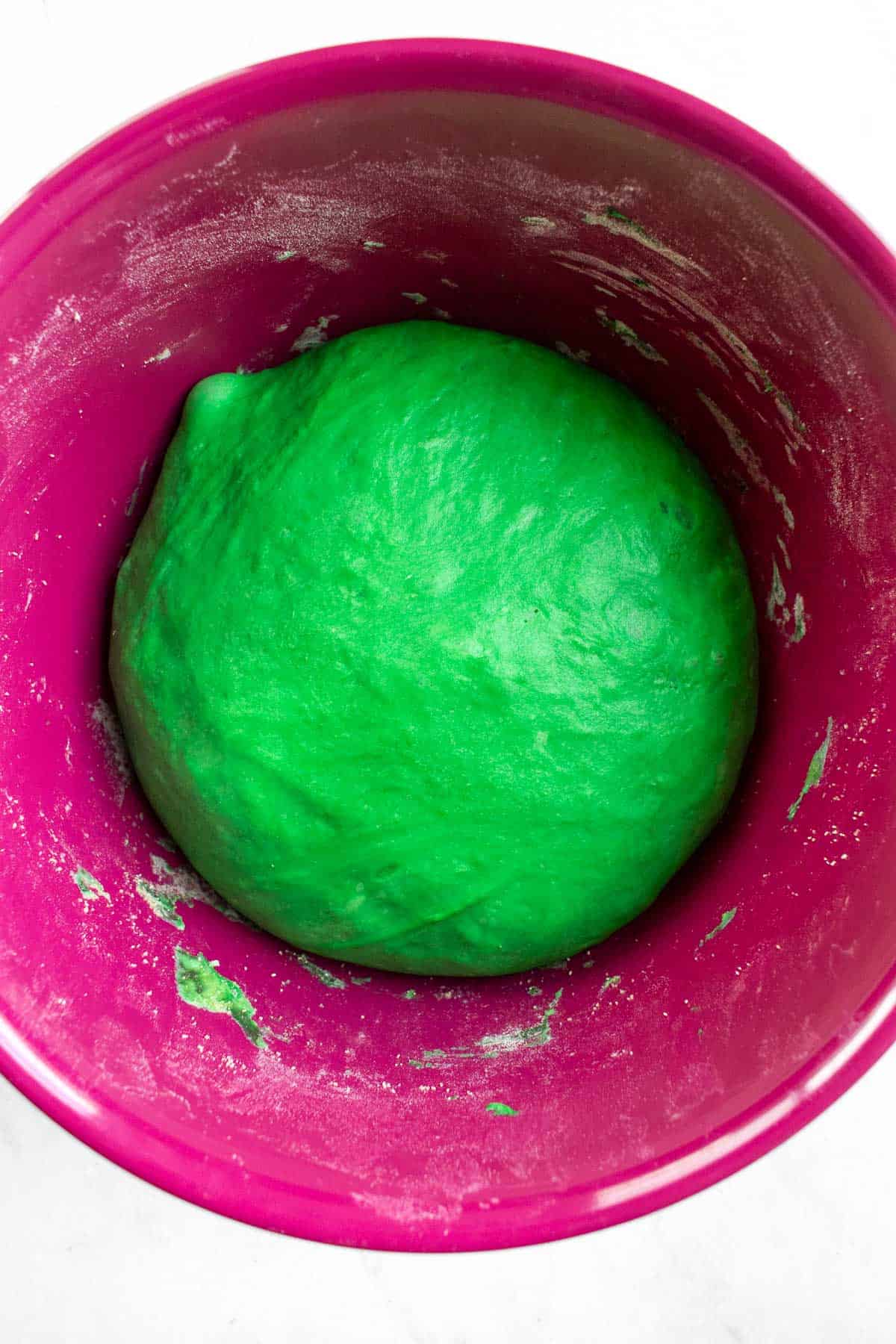
- Rise: Place the dough back in your mixing bowl& cover it with plastic wrap or a dinner plate (to retain moisture), and set it in a warm draft-free place to rise and doubles in size, after about 2 hours.
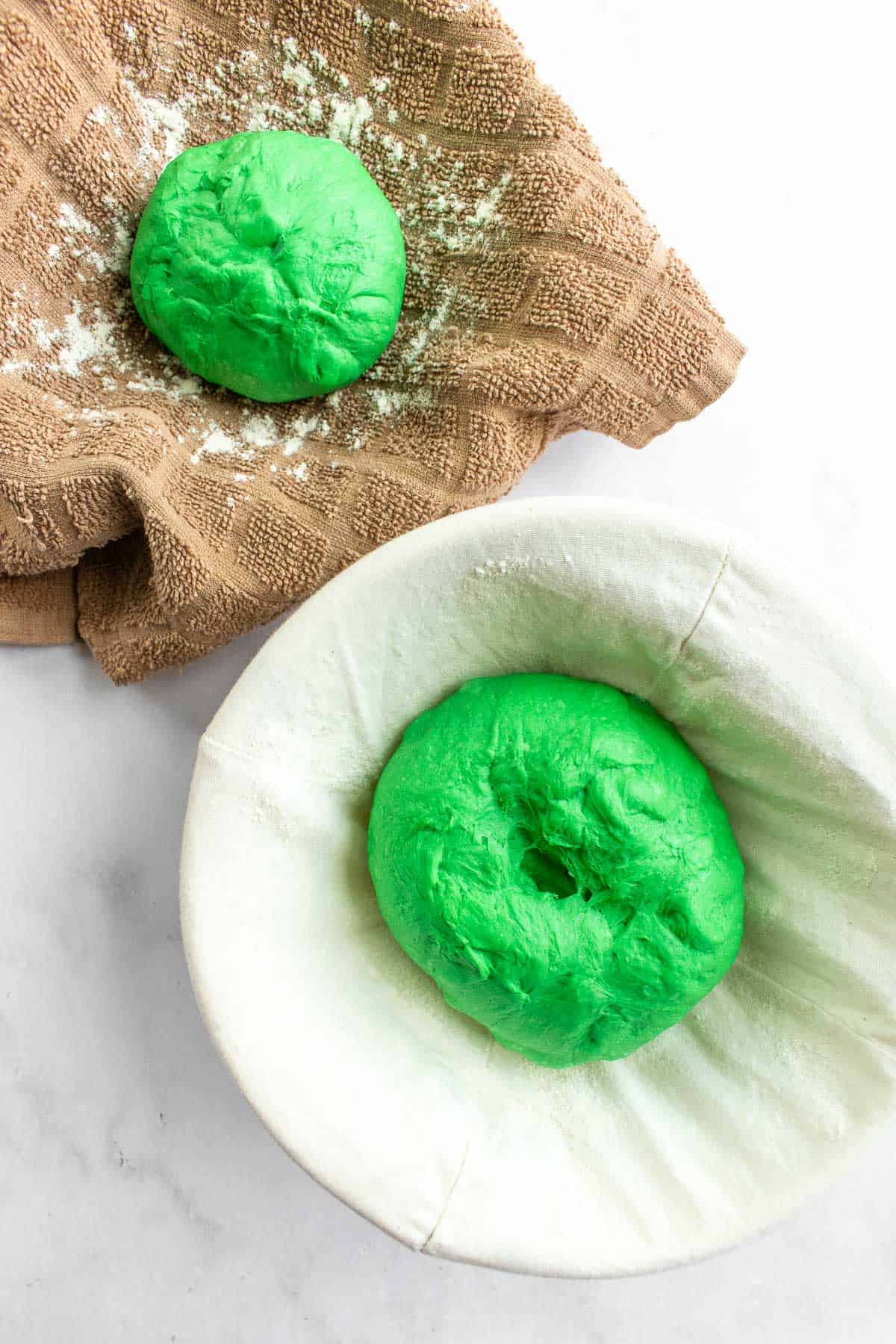
- Shape: On a clean surface, divide the dough into two pieces: one ball that's ¾ of the dough, and one ball that's ¼ of the dough. For both balls, create tension on the surface by using your hands to gently push the top of the down the sides and underneath itself. Tuck any seams underneath, then place them seam-side-up in two round proofing baskets or shallow bowls lined with a kitchen towel & dusted with a little flour.
- Proof: Cover both balls of dough with a towel and allow them to proof in a warm spot for 30 to 60 minutes, until they've puffed up.
- Preheat your oven to 450°F. Place a Dutch oven with the lid in the oven to become hot as the oven preheats.
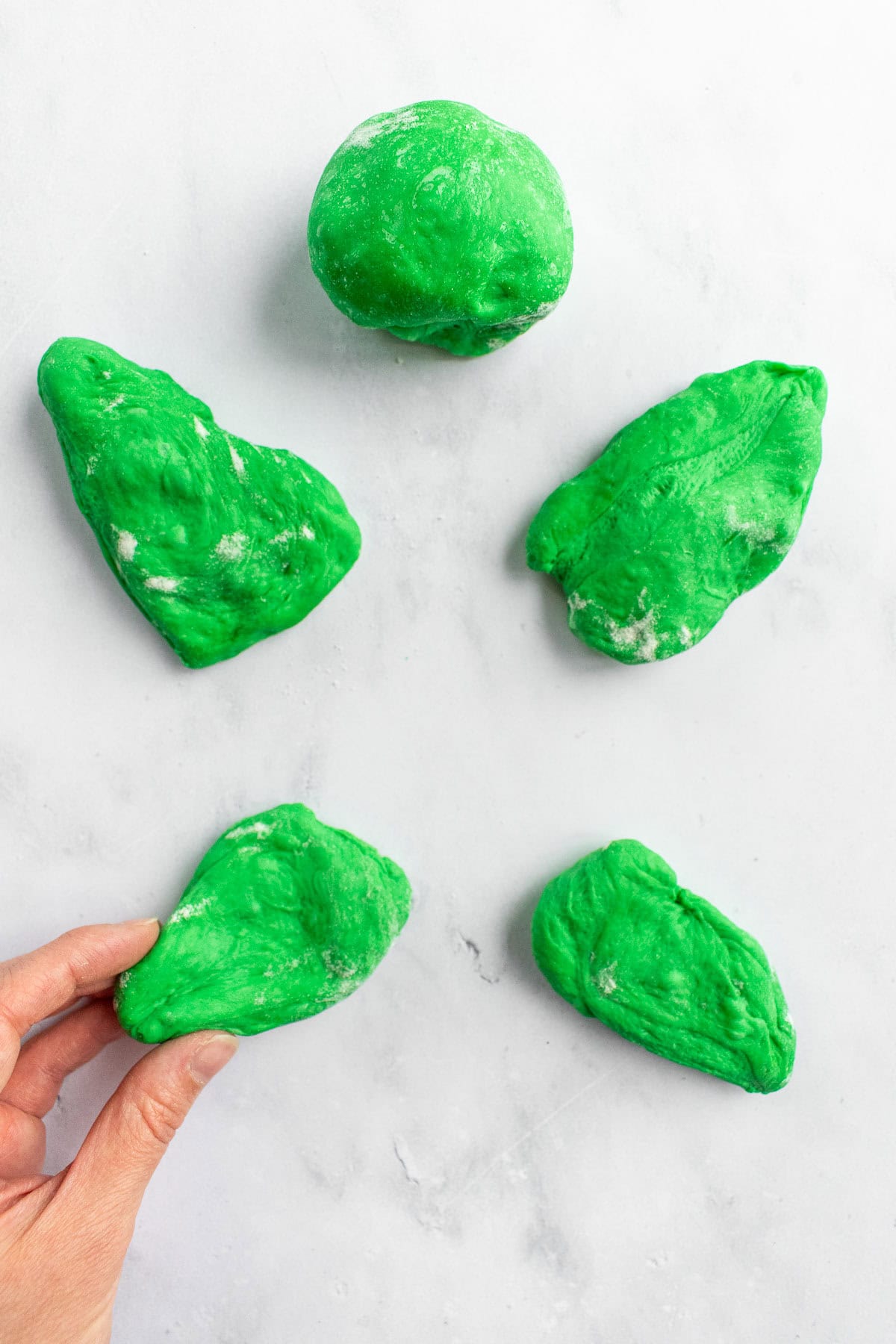
- Form the Head, Arms, & Legs: Grab the smaller ball of dough first. Use about one-third of that dough to form a ball for the head & set aside. Divide the other two-thirds of the dough into quarters and form them into thick, long triangles for the arms and legs. Set aside.
- Form the Shell: Sprinkle a little flour or cornmeal on a large piece of parchment paper or a silicone bread sling. Grab the larger ball of dough and place it seam-side-down on top.
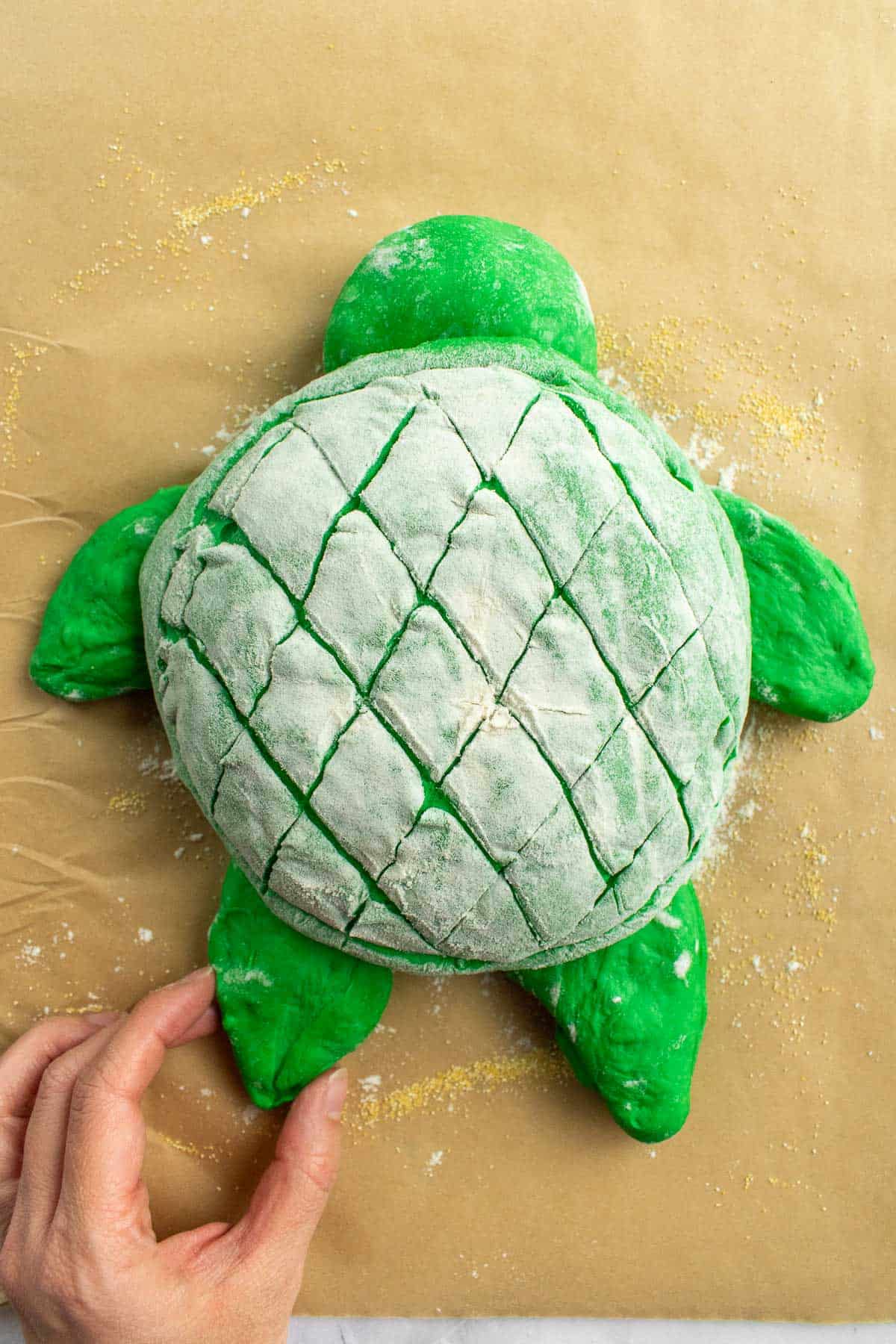
- Score: Dust the top of the turtle shell with flour and gently spread it in an even, thin layer with your hand. Use a bread lame or really sharp, thin kitchen knife to make ¼-inch (0.6cm) deep perpendicular diagonal lines, to look like a checkerboard. Cut a large circle around the outer edge of the ball ½-inch (1.25cm) deep (to control expansion as it bakes).
- Gently place the head, arms, and legs slightly underneath the shell on the parchment paper.
- Bake: Remove the hot Dutch oven from your oven and remove the lid. Pick up the bread by holding the corners of the parchment paper, and carefully place it in the hot Dutch oven. Cover with the lid and place it in the oven. Bake covered for 30 minutes, then remove the lid, and bake for an additional 10-15 minutes uncovered, until the crust is crispy. Allow the loaf to cool on a cooling rack for at least 1 hour before slicing. Enjoy!
Notes
- Green Color: I prefer using gel-based food dye since it keeps its vibrant color even after it's baked. If you want to keep it natural though, whisk 2 tablespoons of matcha powder with the dry ingredients. It'll be pretty green on the inside, and kind of brown-green on the outside and add an earthy flavor to your bread.
- Shaping: See my step-by-step photos in the blog post for reference of the size & shape of all the pieces.
- Scoring: Dusting the shell with flour makes a big difference in being able to differentiate the checkerboard score pattern on the shell from the green color underneath. I use a bread lame to score my dough, which creates thinner, cleaner cuts than a kitchen knife.
- Storing: Allow the bread to cool completely, then store it in a paper or cloth bag. To freeze, wrap the loaf tightly in plastic wrap then aluminum foil.
Nutrition
This website uses affiliate links which may earn commission for purchases made at no additional cost to you.

I'm eggcited to hear from you :)