

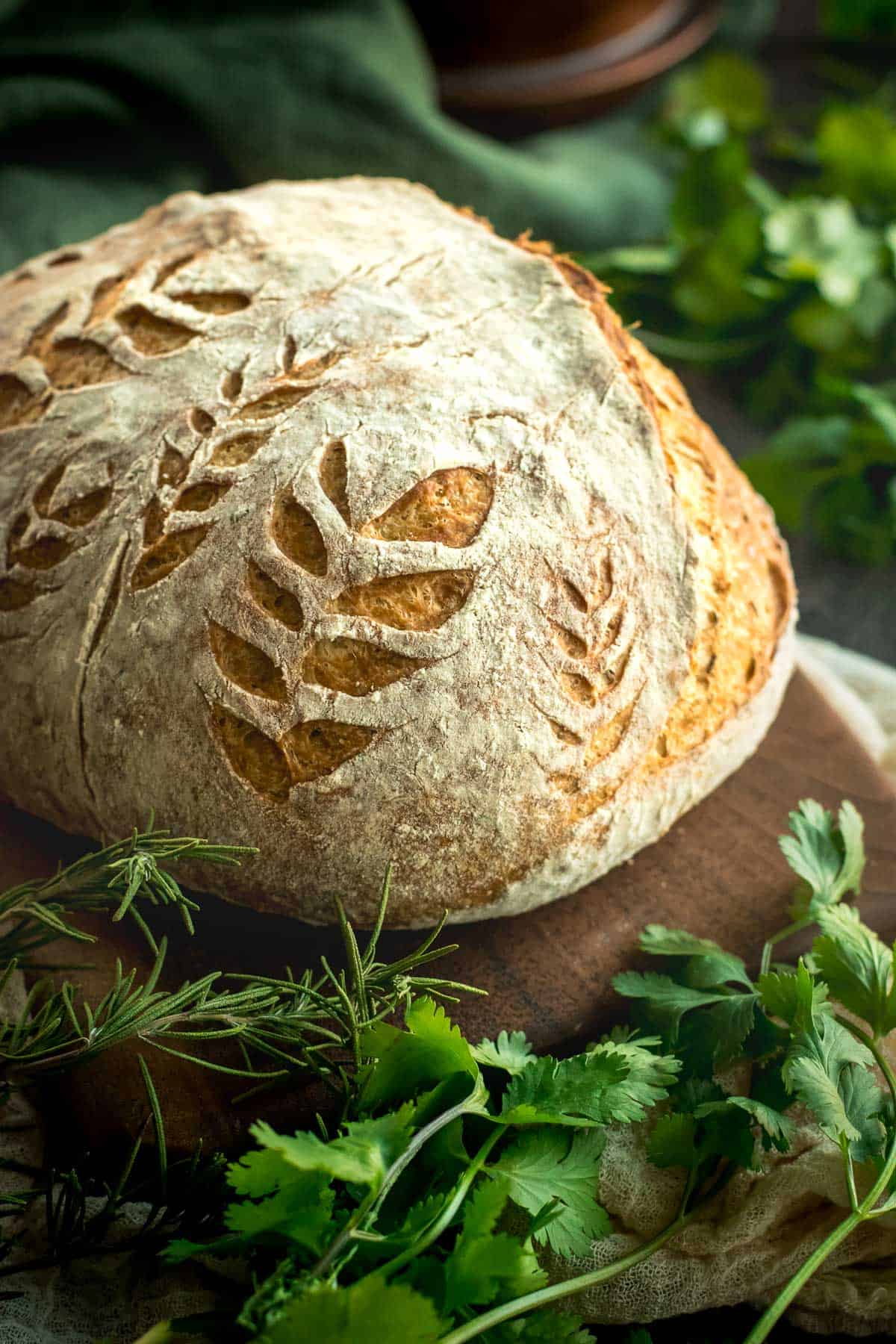
This rustic olive oil bread is baked in the Dutch oven for a crisp, golden crust. Bread flour gives it a nice rise, olive oil keeps it soft & moist, and Italian herbs + onion powder add plenty of savory flavor.
This website uses affiliate links which may earn commission for purchases made at no additional cost to you.
My Go-To Olive Oil Bread for Soup Nights
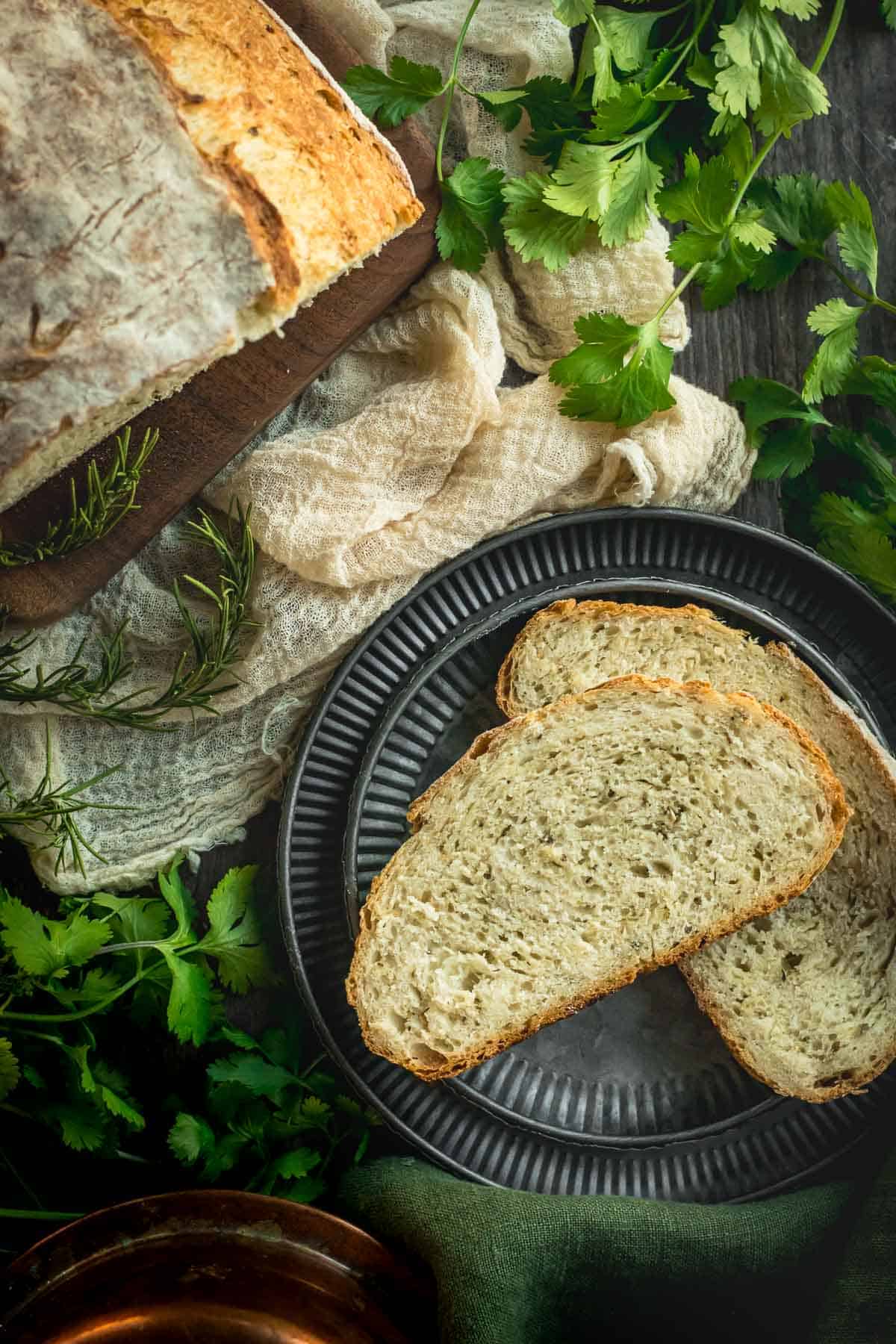
This olive oil bread is the kind of rustic loaf that I love pulling out of the oven while a cozy soup simmers on the stove. It's soft enough to tear by hand, yet hearty enough for dunking.
I based this recipe on my Italian herb and cheese bread, and adapted it to include a whole quarter cup of olive oil in the dough. Olive oil weakens gluten, so this bread is super tender and stays soft for several extra days. It also slows fermentation slightly, so while it takes a little longer to rise, that time allows a deeper flavor to develop.
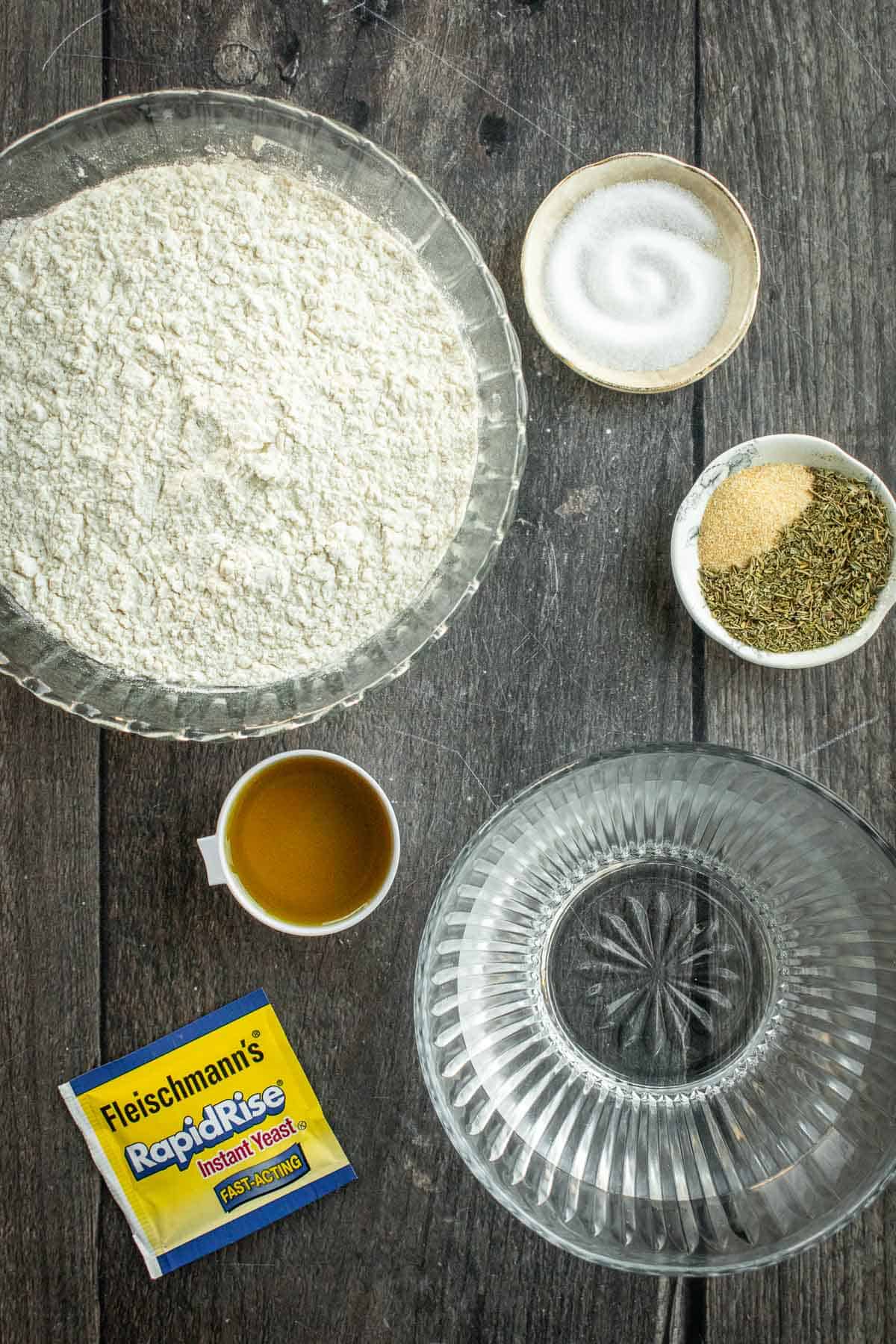
My Notes on the Ingredients
- Flour: I prefer using bread flour over all-purpose here, because its higher protein content creates a stronger gluten network to counteract the effects of olive oil & dried herbs on the structure.
- Yeast: I prefer instant yeast for my artisan olive oil loaf, since active dry yeast would contribute to an even longer rise, which we're already getting from the oil + herbs.
- Olive Oil: Honestly any good-quality olive oil works here; it doesn't have to be extra virgin. Or splurge on an herb-infused olive oil for even more flavor.
- Herbs: I like the simplicity of using a dried Italian herb blend, but individual herbs like rosemary and basil work great too in this dough.
Let's Bake Dutch Oven Bread!
For the full step-by-step directions and ingredient quantities, scroll down to the recipe card at the bottom of this post.
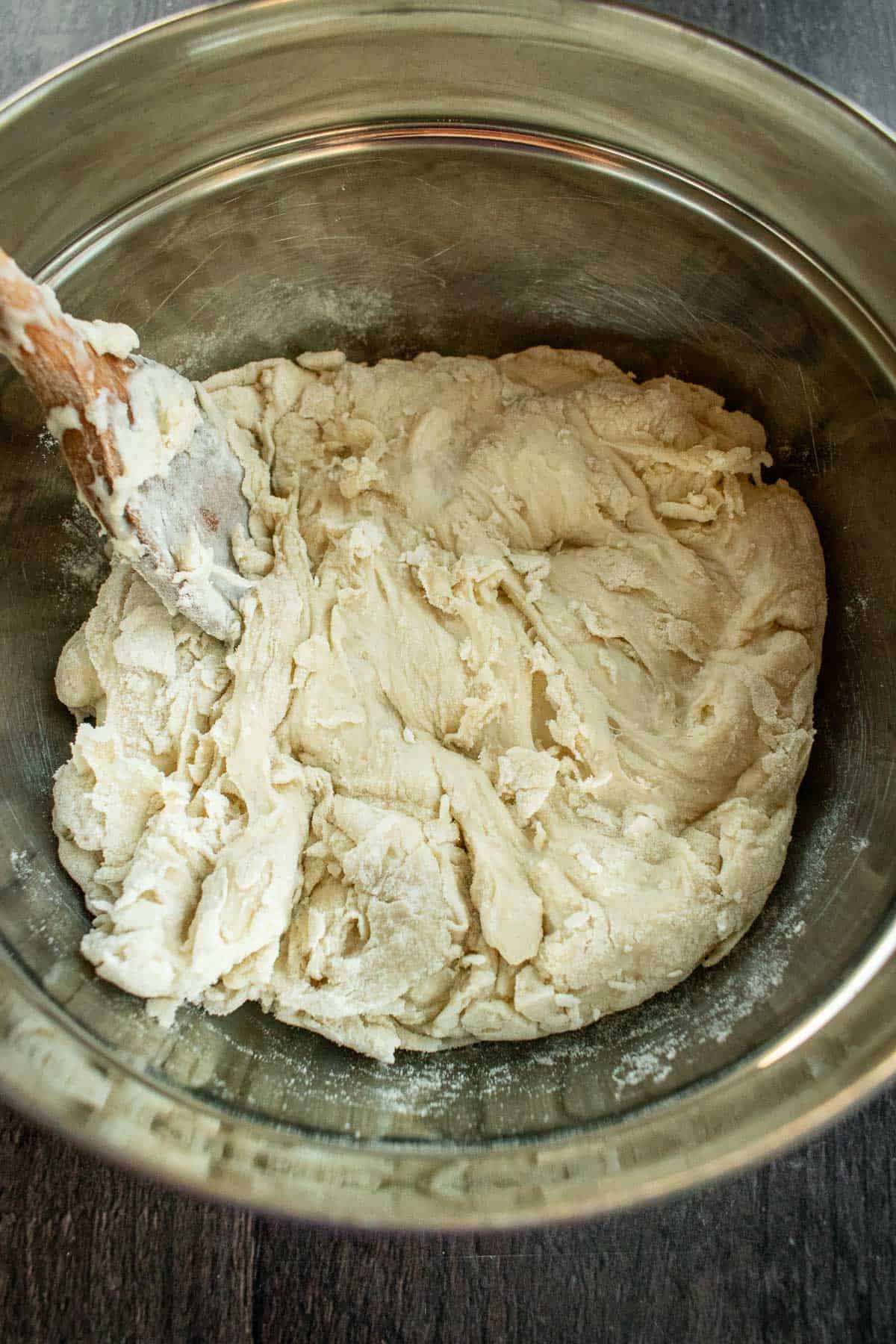
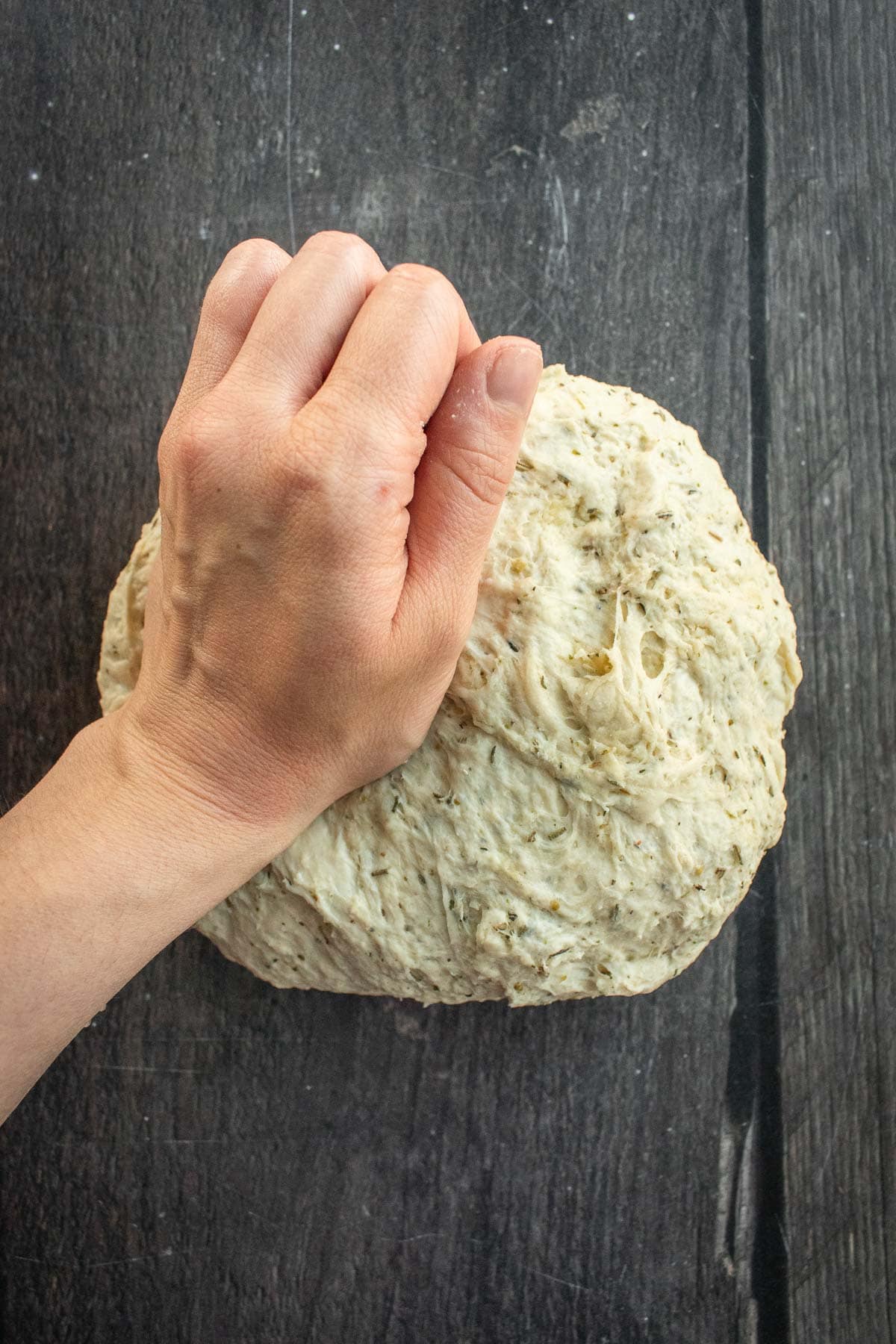
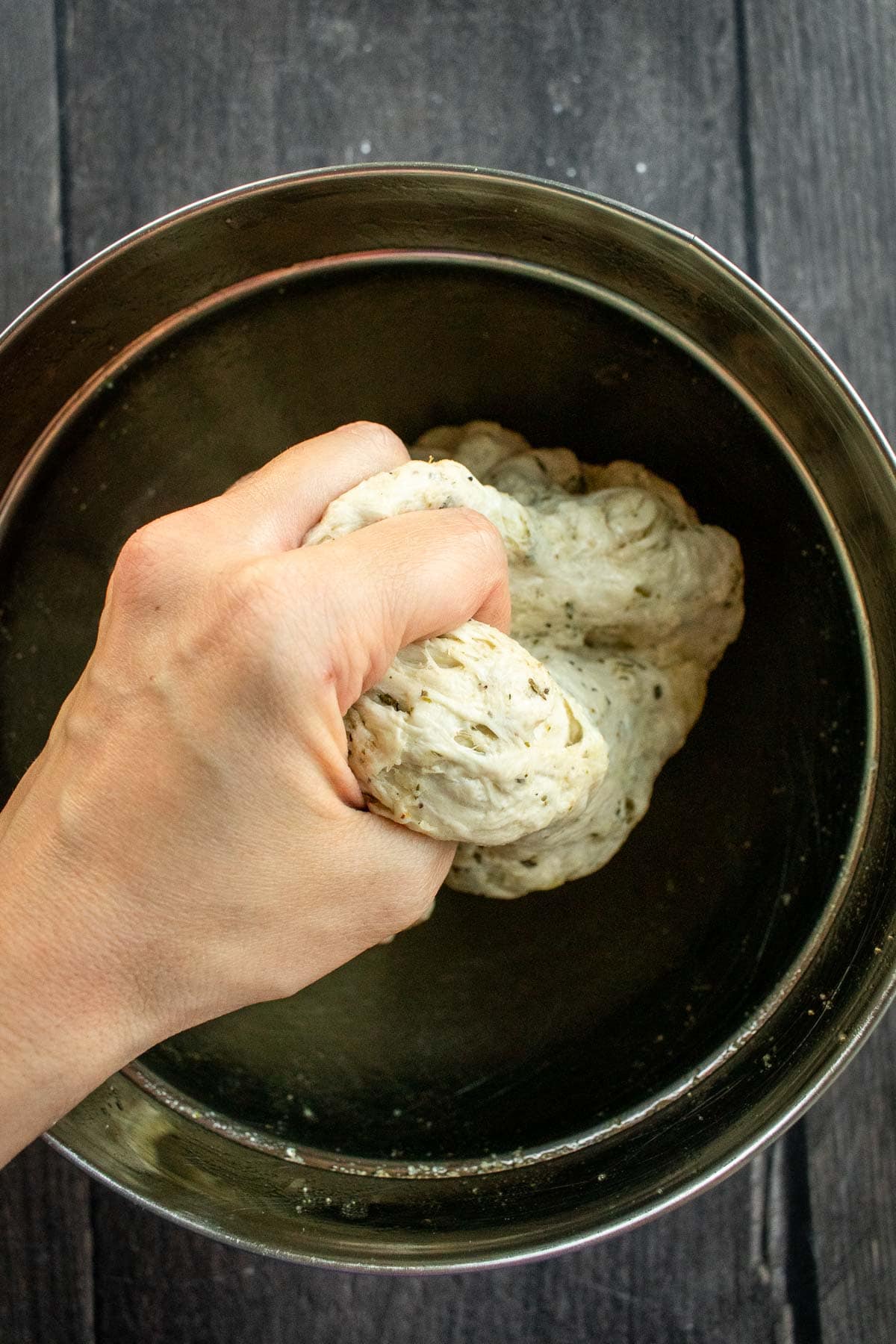
Carissa's Mixing Tip
After I add the remaining ingredients to the autolyze, I like to squish the dough between my fingers before I start kneading it, to incorporate everything evenly.
Tips for Crusty Bread with a Pillowy Soft Crumb
- Autolyze: Unlike bread dough without olive oil, I prefer to make this one with an extra step to autolyze. This lets the flour hydrate and begin gluten development before we add the herbs that will compete with the flour for moisture, and the oil which will coat flour proteins.
- Hydration: Dried herbs absorb moisture and can make dough feel a little stiffer, so I made this recipe with a hydration level around 67%, but it actually feels closer to 70% with the olive oil, to prevent a tight crumb.
Olive Oil Italian Herb Bread with Yeast
developed & tested by:

Equipment
Ingredients
- 4½ cups bread flour 540 g
- 1½ cups warm water between 105°F and 110°F
- 2¼ teaspoons instant yeast one packet
- 2 teaspoons salt use table salt or fine sea salt
- 1 teaspoon onion powder
- 2 Tablespoons dried Italian seasoning
- ¼ cup olive oil
Instructions
- In a large mixing bowl, mix the flour and water until it's a shaggy dough. It'll feel stiff, but there shouldn't be any dry pockets of flour in the bowl. Set aside at room temperature for 30 minutes to 1 hour.
- Add the instant yeast, salt, onion powder, Italian seasoning, and olive oil. Knead the dough in the bowl for a minute to mix everything together.
- Tip the dough onto a clean work surface and knead it by hand for 6-7 minutes (or in a stand mixer with a dough hook attachment for 4-5 minutes) until it's smooth and elastic. It'll be pretty oily at first, but the longer you knead it, the more it'll come together.
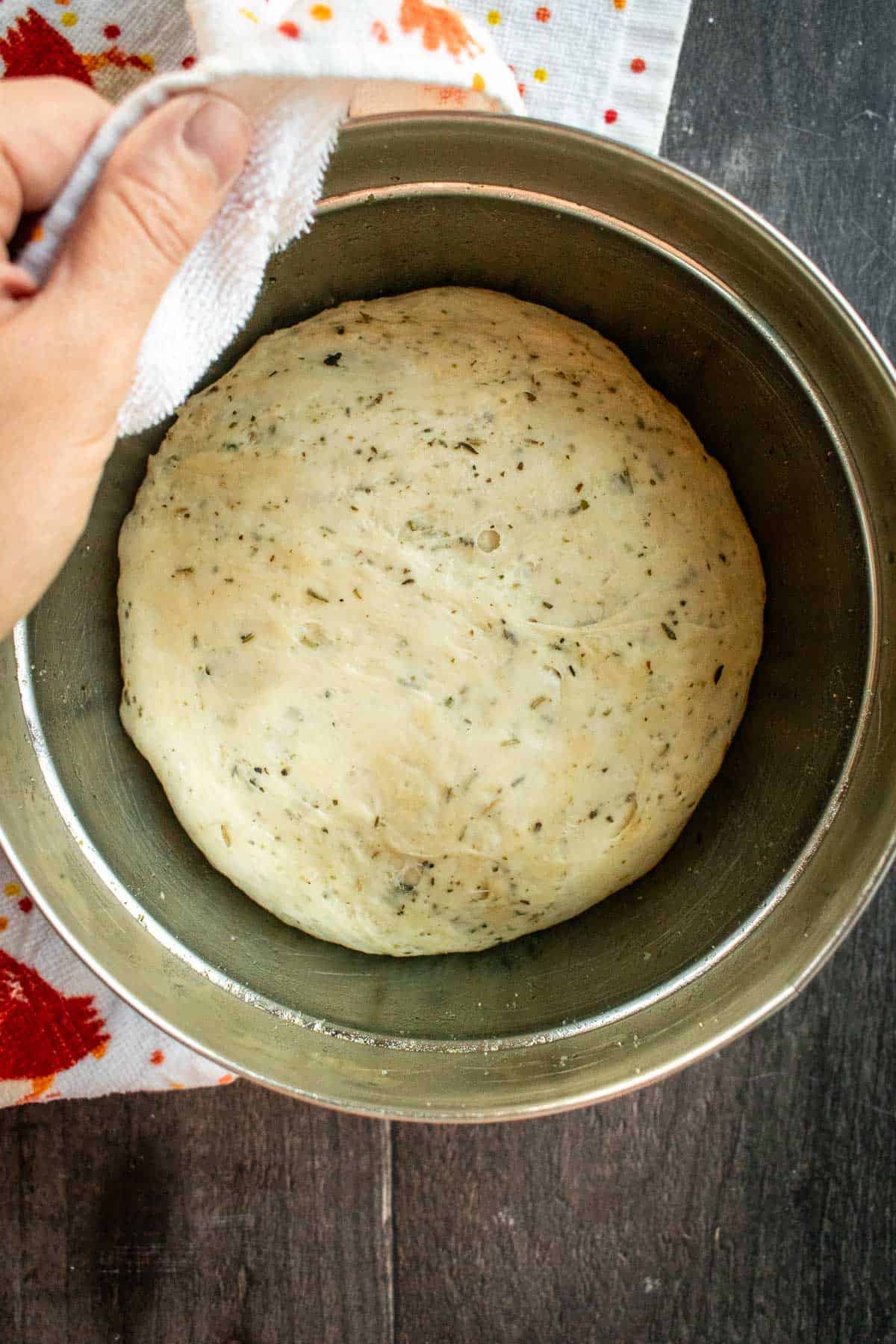
- Shape the dough into a ball and place it back in the mixing bowl. Cover the bowl with a clean kitchen towel, and let it rise and double in size after about 2-2½ hours in a warm draft-free environment. (I let my dough rise in the oven, turned off, with the oven light on.)
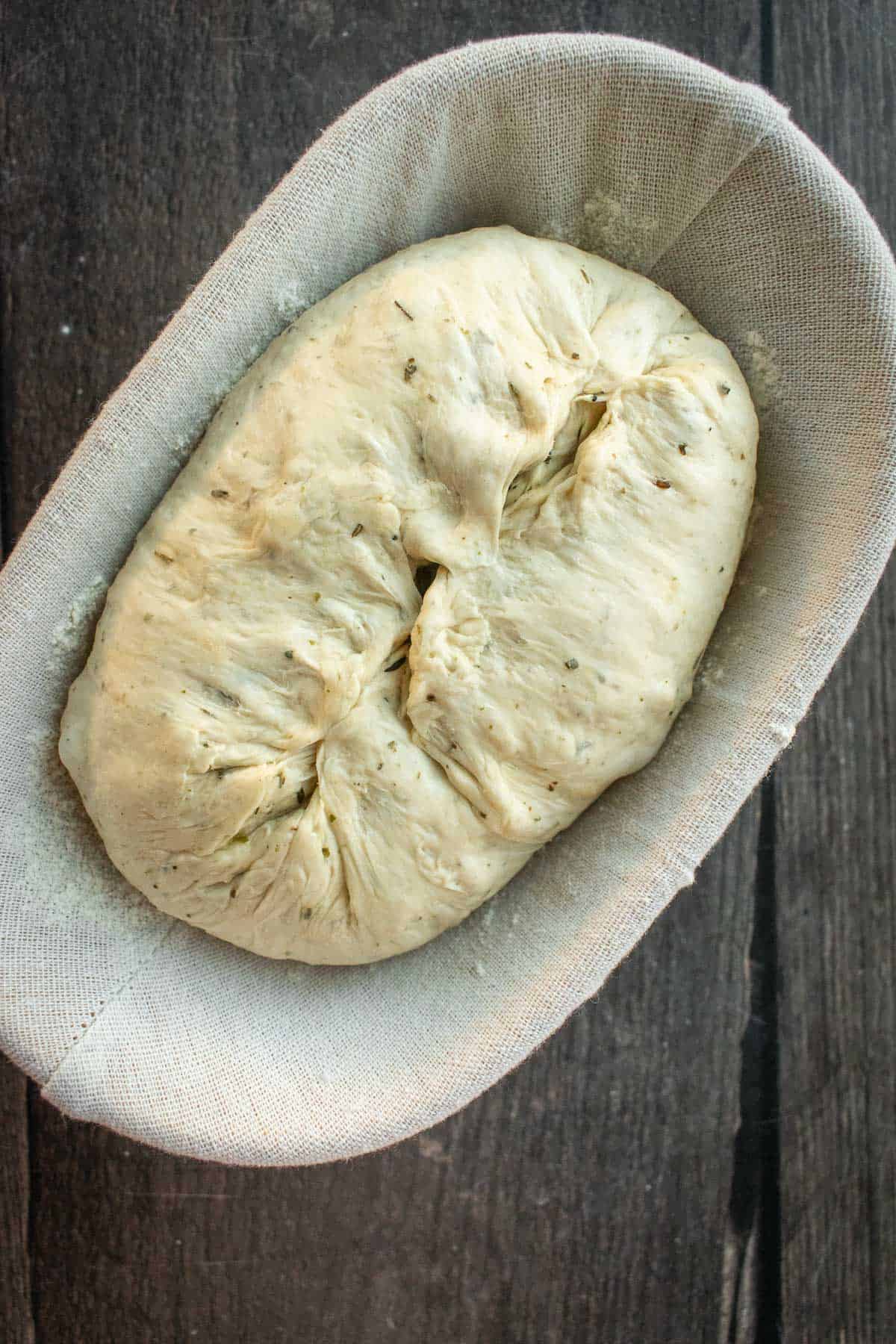
- On a lightly floured surface, shape the dough into a round (boule) or oval shape. Create tension on top by gently spreading the top of the dough down the sides & tuck any seams underneath.
- Place the dough seam-side-up in a proofing basket or wide bowl lined with a kitchen towel and dusted with a little flour. Set the dough aside at room temperature to proof for 1 hour, or until an indentation made with your finger springs back to its original shape after 2-3 seconds.
- Preheat the oven to 450°F. Place a Dutch oven with the lid on inside the oven as it preheats.
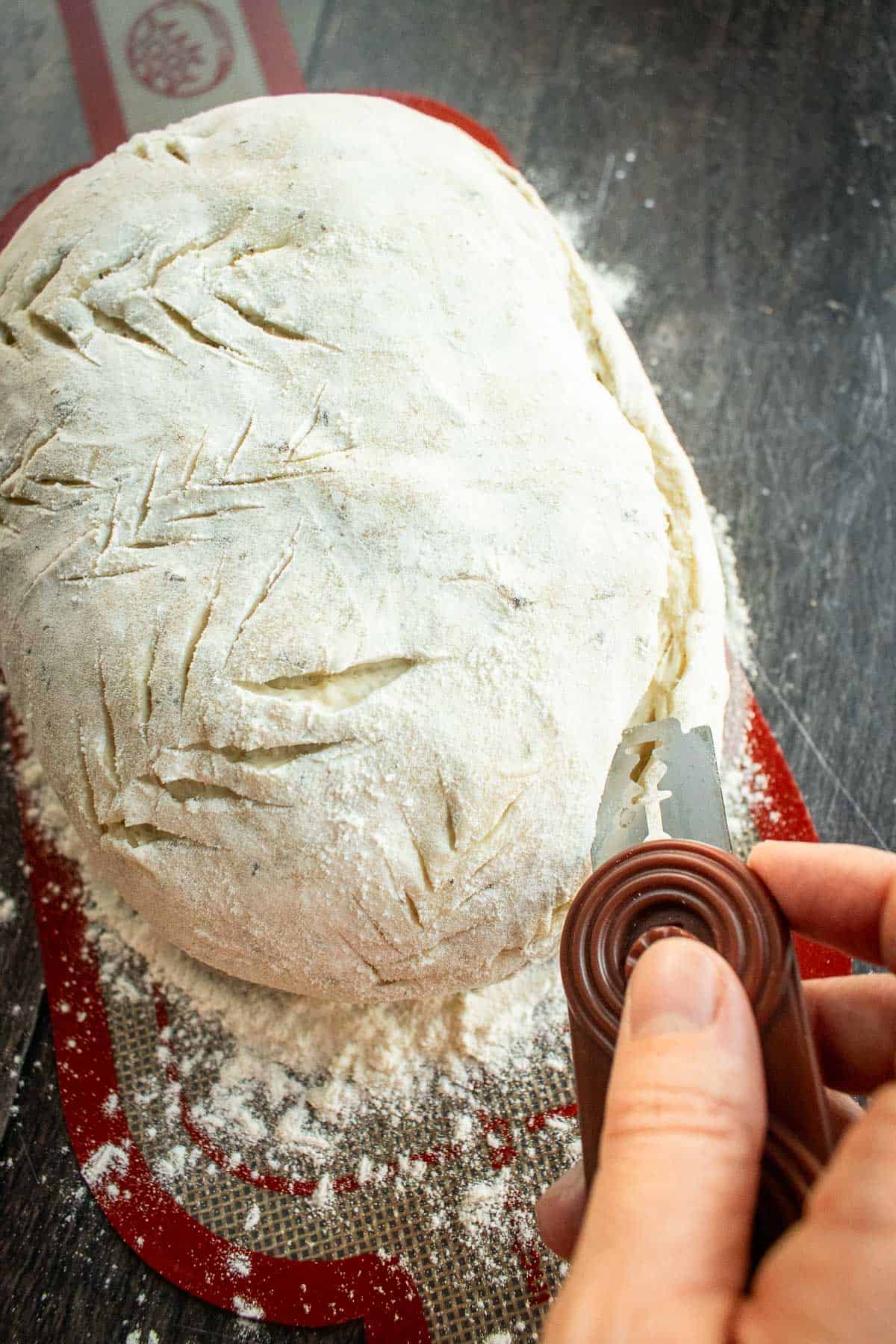
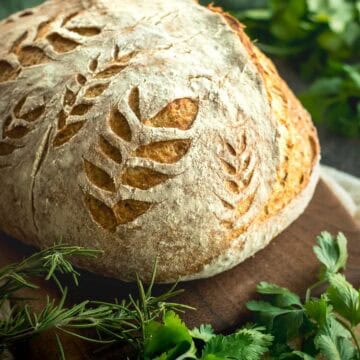
- Sprinkle a little flour or cornmeal on a large sheet of parchment paper or use a silicone bread baking sling. Gently place the proofed dough seam-side-down on top. Score the top of the dough with three 3-inch-long cuts at a 45 degree angle that are ½-inch deep.
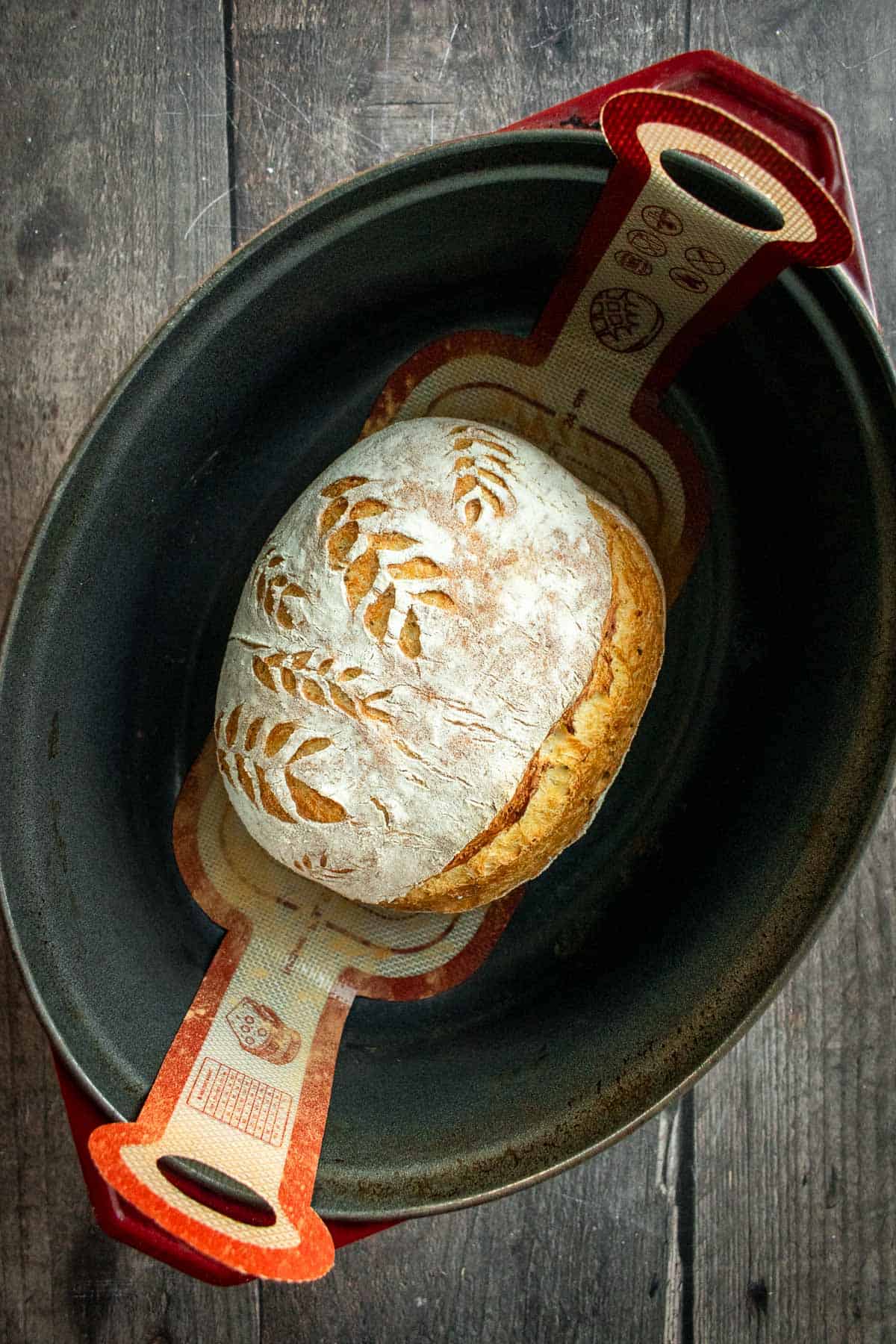
- Carefully transfer your scored dough into the hot Dutch oven by lifting the edges of the parchment paper. Bake with the lid on for 30 minutes, then remove the lid and bake for another 10 to 15 minutes until the crust is crispy and golden.
- Allow the loaf to cool on a cooling rack for at least 1 hour before slicing. Enjoy!
Notes
- Storing: Store your fully cooled loaf in a cloth or paper bag at room temperature. Or wrap it tightly in plastic wrap and aluminum foil to freeze it.
- Herbs: You can swap in dried rosemary, basil, or oregano if you don't have Italian herbs.
- Onion Powder: After testing both onion powder and garlic powder, I like the slightly stronger savory flavor of onion powder. But if garlic is your jam, feel free to swap that in!

I'm eggcited to hear from you :)