

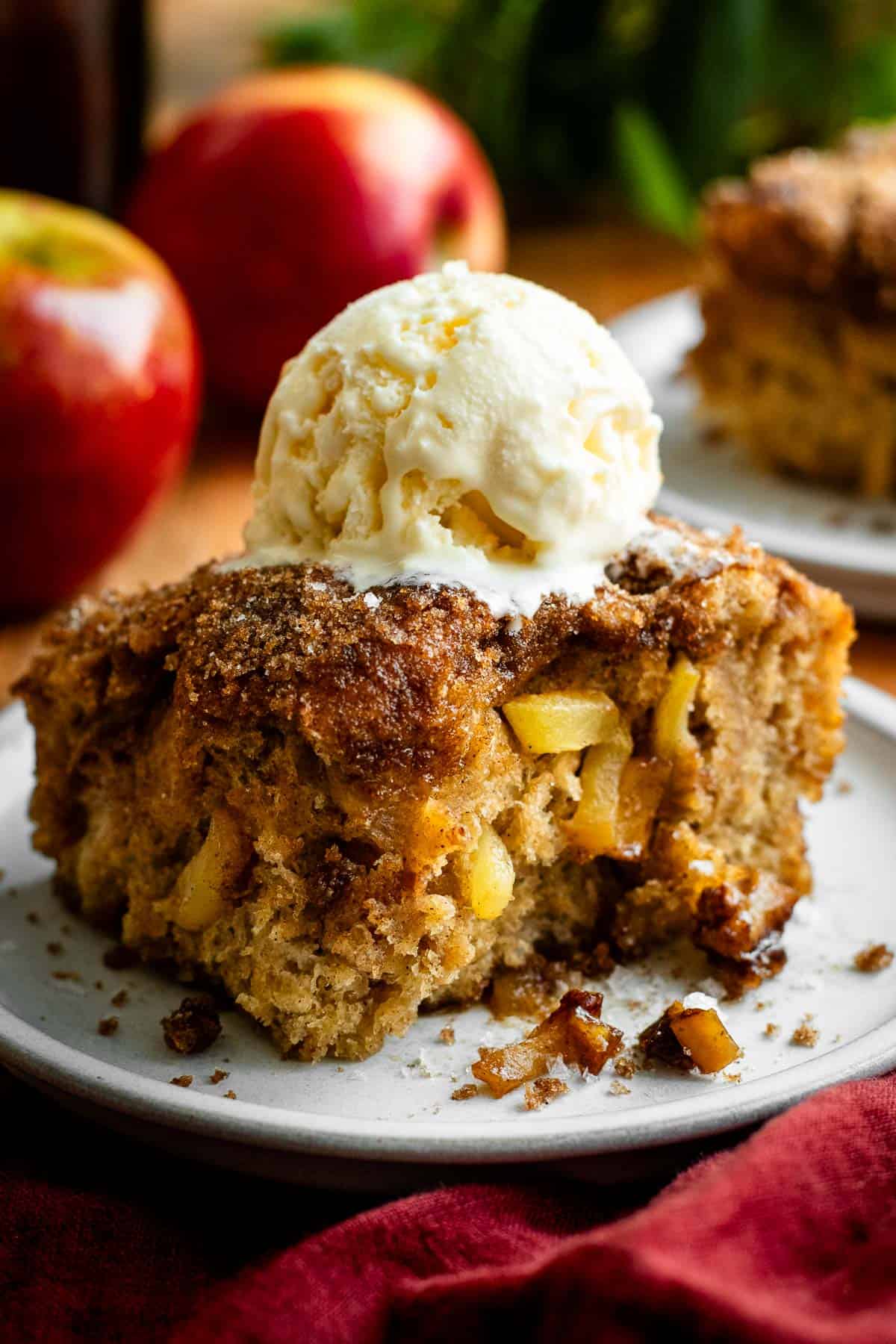
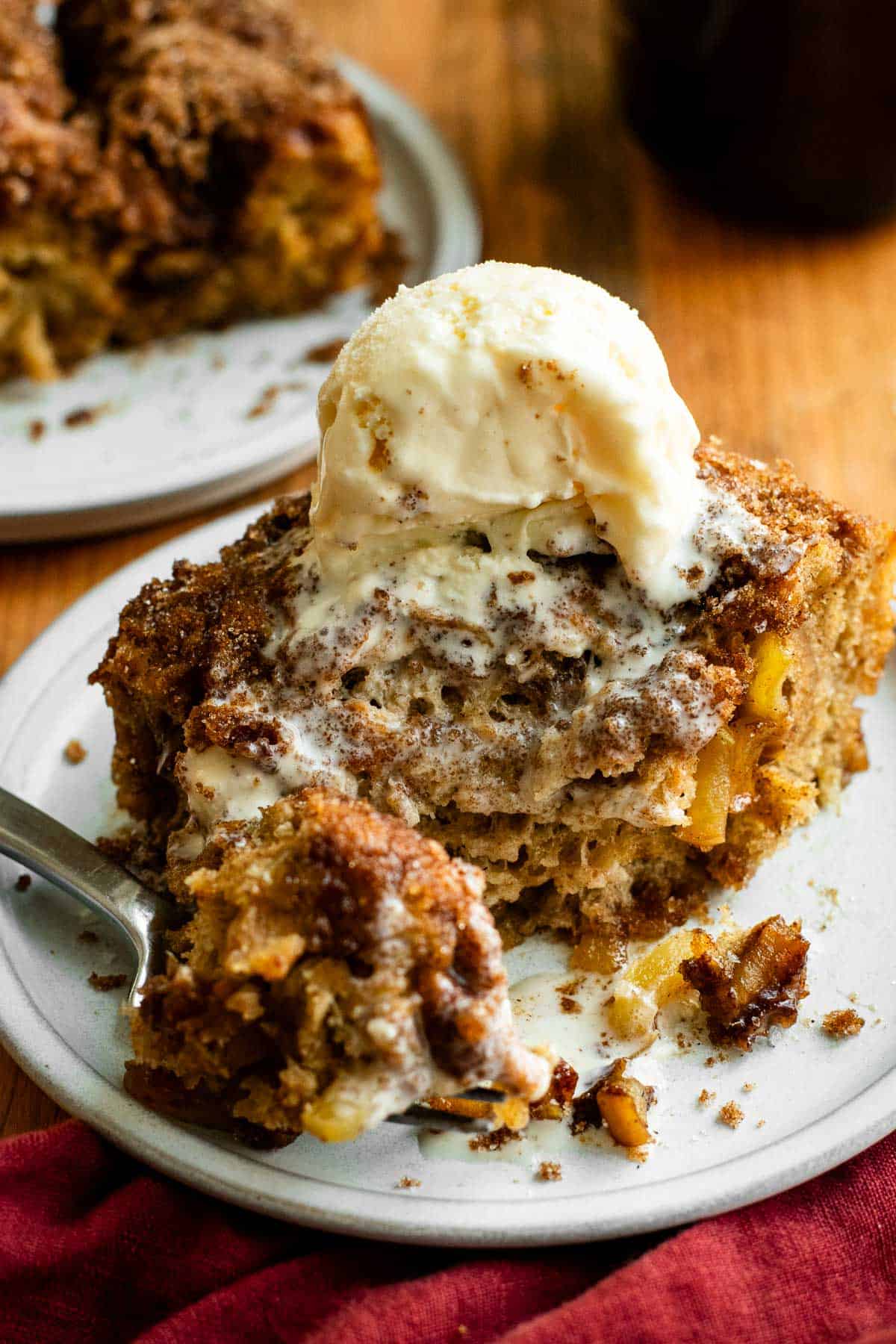
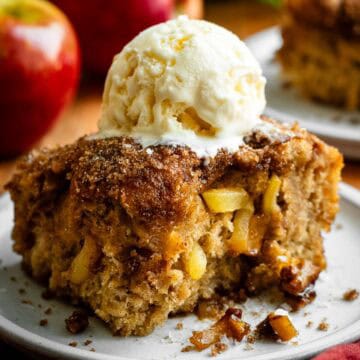
This no-knead apple cider donut focaccia is made with fresh, chopped apples folded into the dough with a gooey caramelized center. Cinnamon sugar is sprinkled on top to create a crackly donut-style crunch.
Featured Review
"This is soooo good. Didn't have ice cream, wished I had ice cream. Pretty much followed recipe 100%. So crunchy, yet soft." -Aaron
Apple Cider Donut Focaccia Has No Business Tasting This Good
Every fall, we visit our local pumpkin patch so I can beeline straight to their mini, sugar-coated apple cider donuts, pierced onto the straw of an apple cider slushie for the ultimate sugar-spike snack. And I wanted to recreate that exact flavor in the form of my favorite bread, focaccia. I kept the apples raw instead of cooking them down, so this truly tastes like an apple cider donut, not apple pie.
This sweet focaccia is deceptively simple. Chopped fresh apples (no peeling & no precooking needed) get sprinkled over the dough, which then gets folded in half once to work them in. The result is tender (never mushy) apple pieces in every single bite without any real effort. On top, a cinnamon sugar blend bakes up crackly and caramelized, just like the real donut coating. I like adding a teaspoon of ground cardamom to the cinnamon and nutmeg; it's optional, but it brings a little European warmth I can't resist. And despite how soft and pillowy this bread bakes up, make no mistake, it's still bread. Chewy, rustic, yeasted, and definitely not a loaf cake pretending to be bread.
For the cinnamon sugar topping, I use a blend of white and brown sugar. Brown sugar draws moisture out of the apples and holds onto it, creating a caramel-flavored syrup in the center instead of dry, bland fruit. And white sugar delivers that shattering crunch on top. It all goes on the bread in three stages: a layer folded into the middle and two more layers on top (one before baking, one right after).
I swap the water in the dough for apple cider, which adds sweet-tart apple flavor and a darker golden crust. Apple juice works nearly as well, if that's what you have on hand, though it is noticeably sweeter. I also tested a reduced cider version, but the extra step wasn't worth it, since the flavor barely budged.
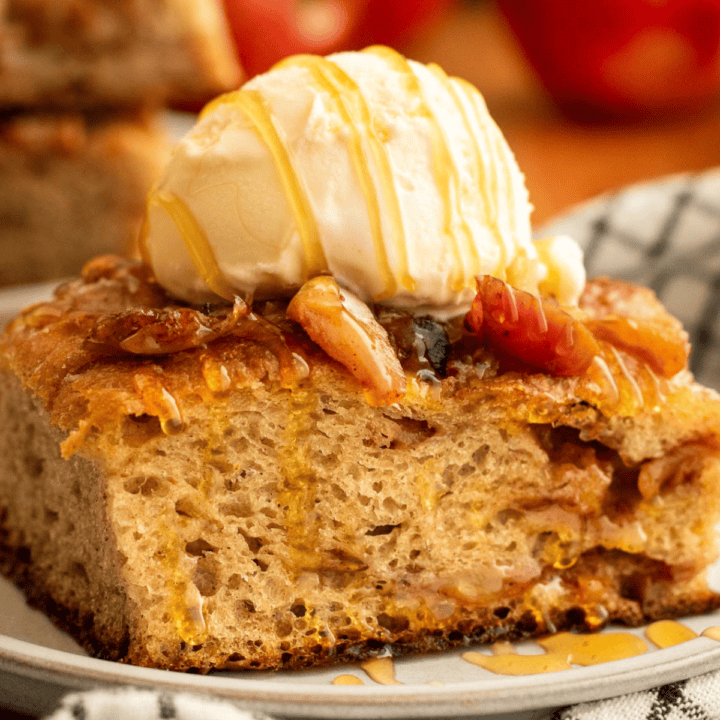
This apple cider donut focaccia tastes great on its own, or with a scoop of vanilla ice cream and a pinch of flaky sea salt for the ultimate cozy fall dessert. And if you love a good fall focaccia moment, my pumpkin cinnamon roll focaccia is basically this bread's cinnamon-swirled cousin. Or if apple orchard flavors are your love language, my apple fritter cake is calling your name next!
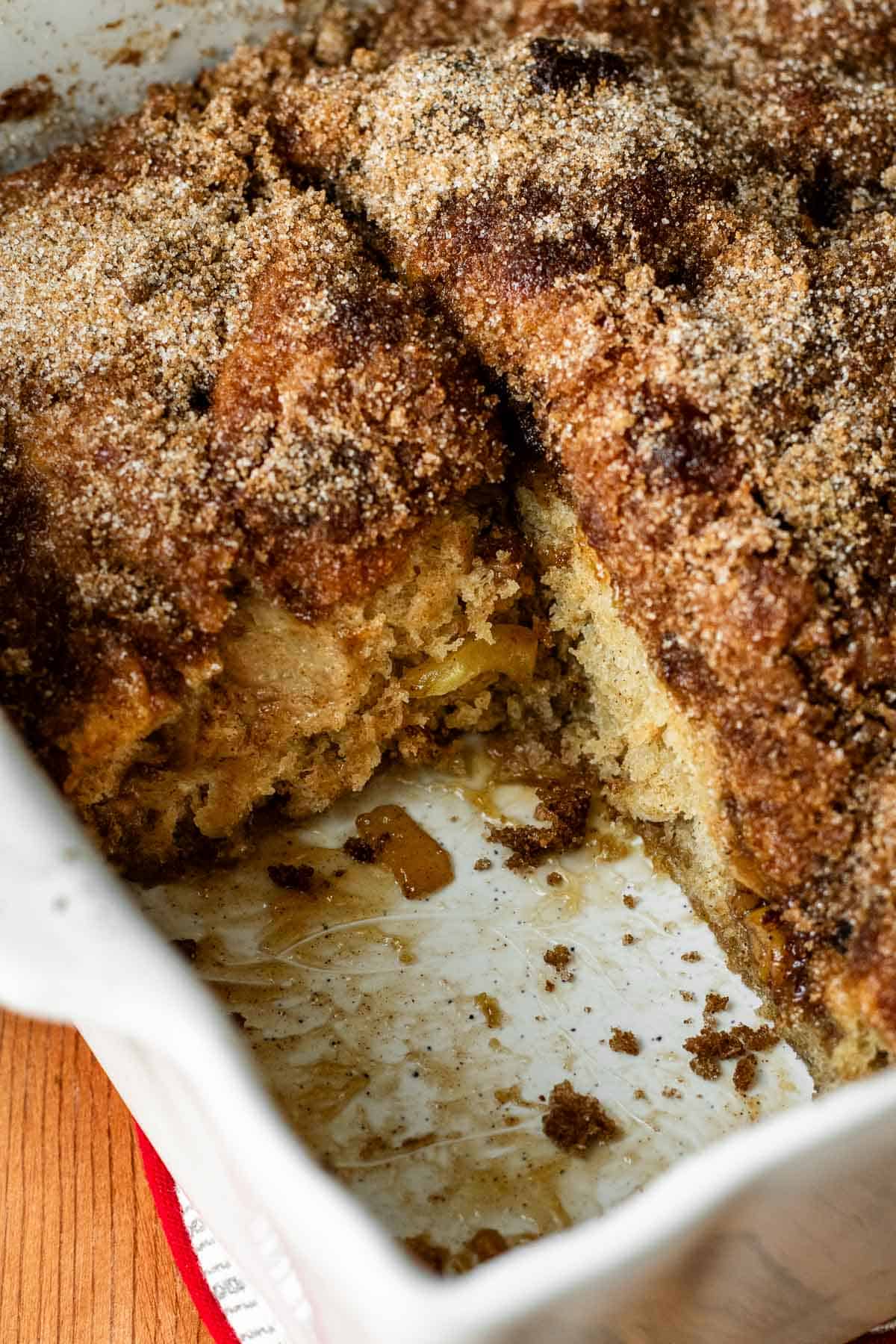
How to Bake Apple CIder Focaccia
For the full step-by-step directions, scroll down to the recipe card.
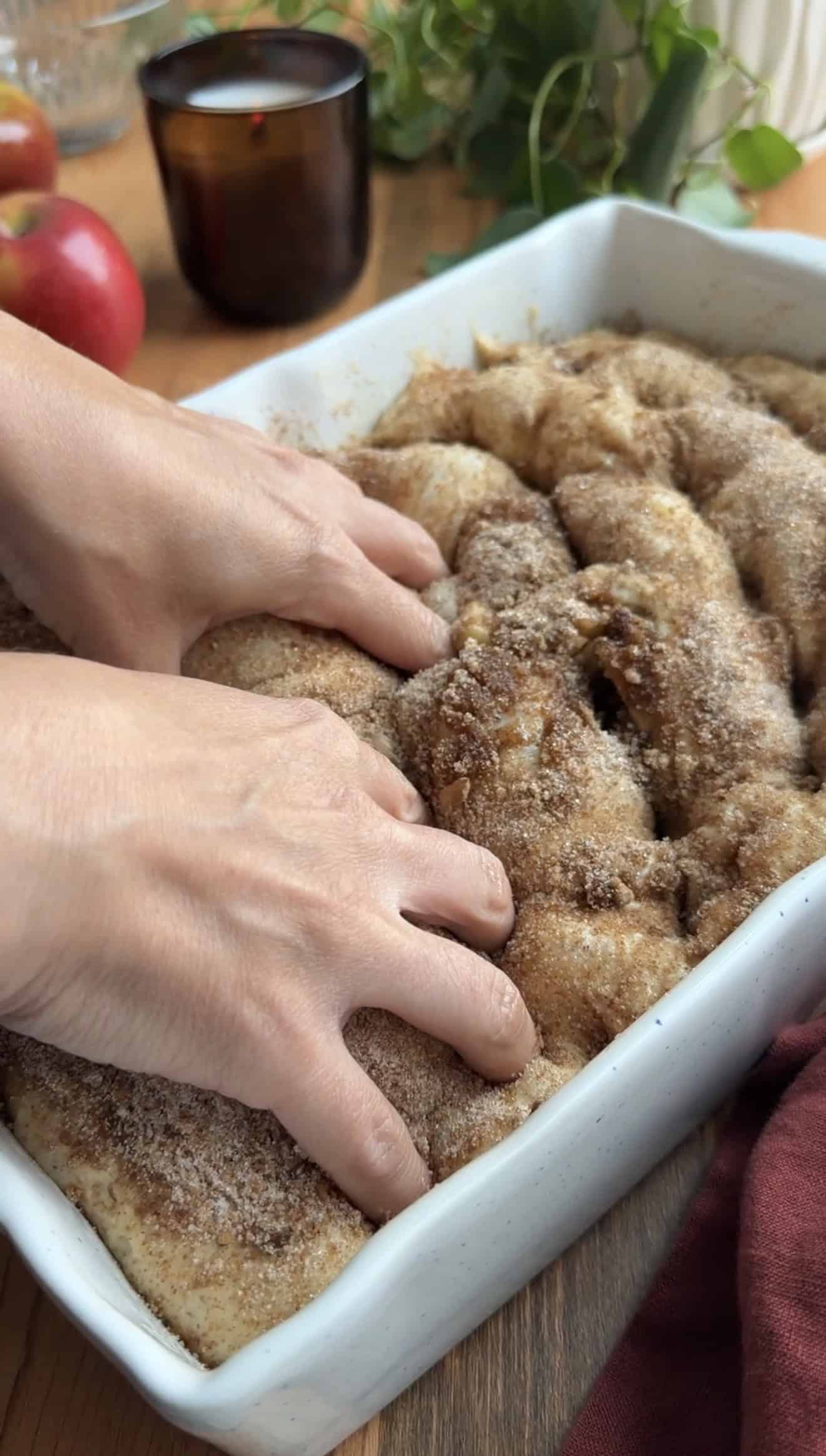
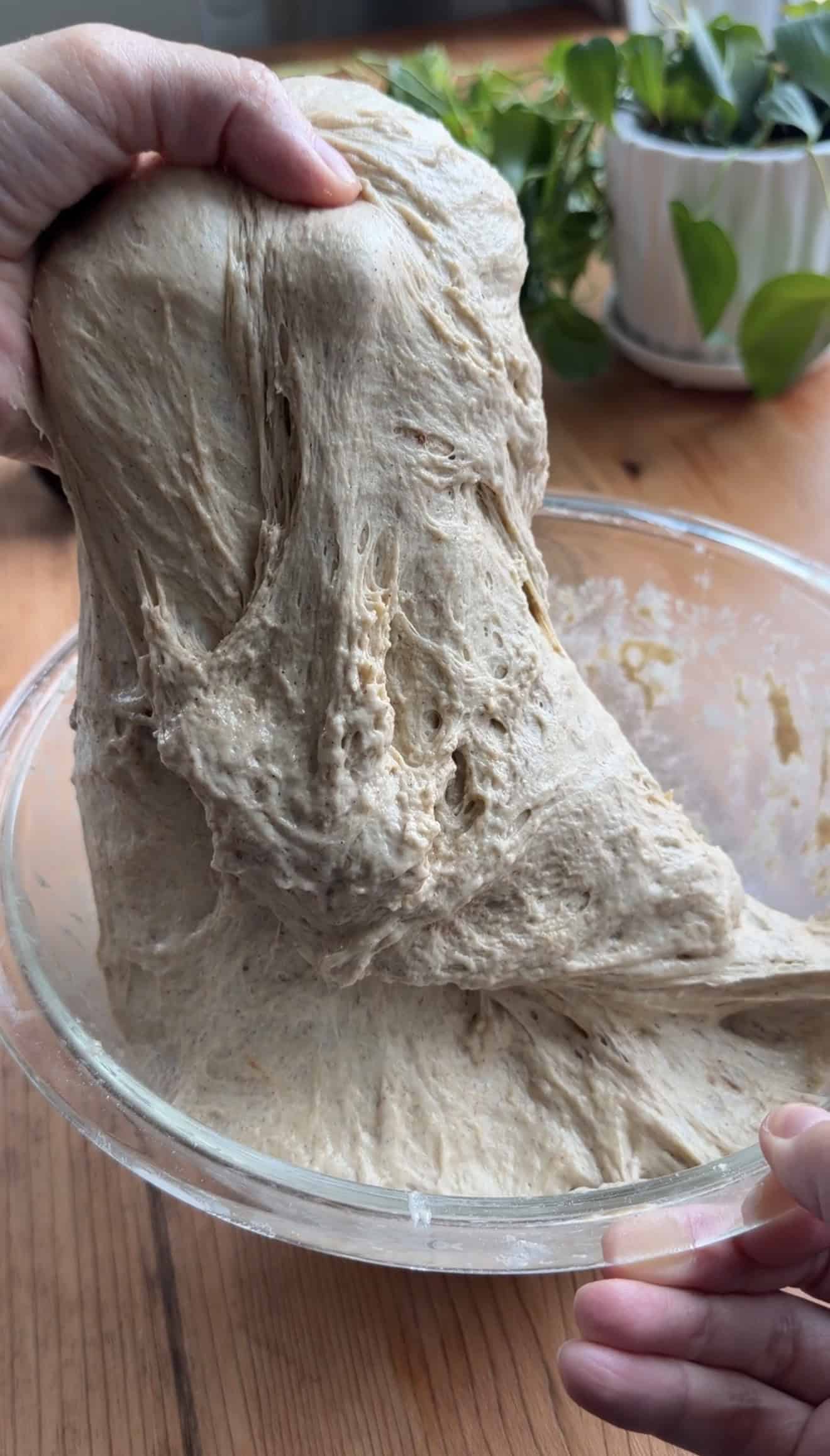
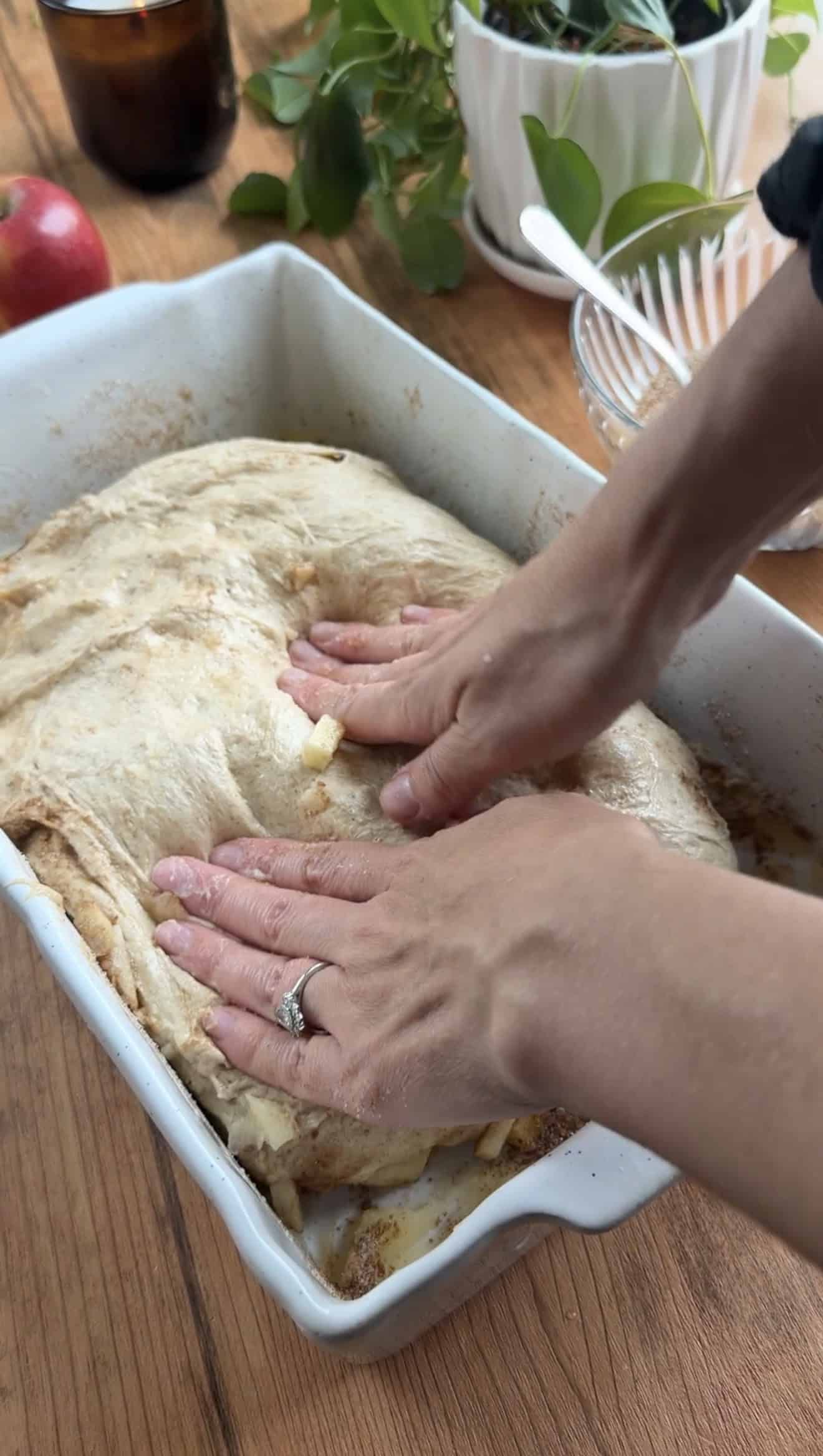
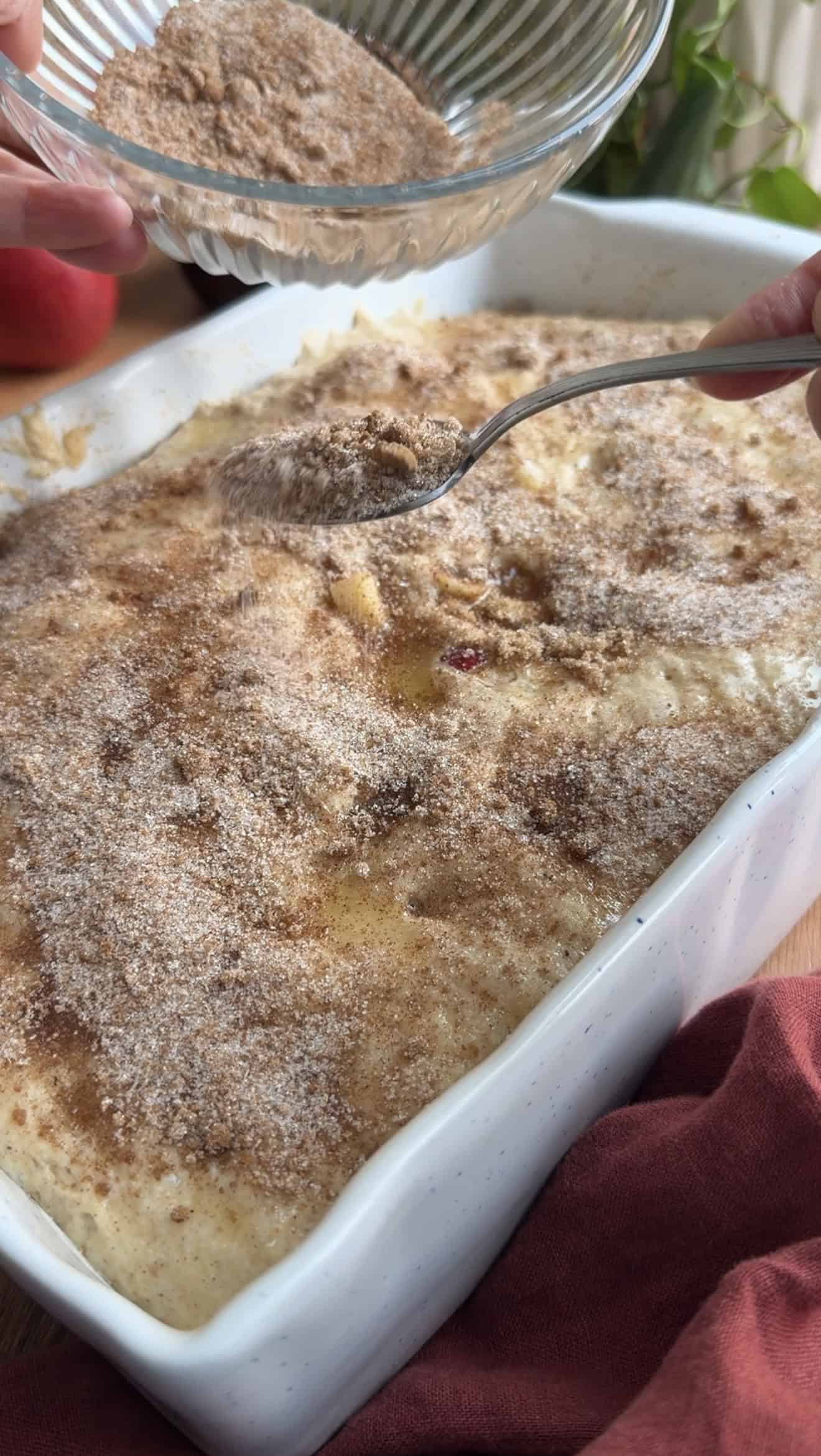
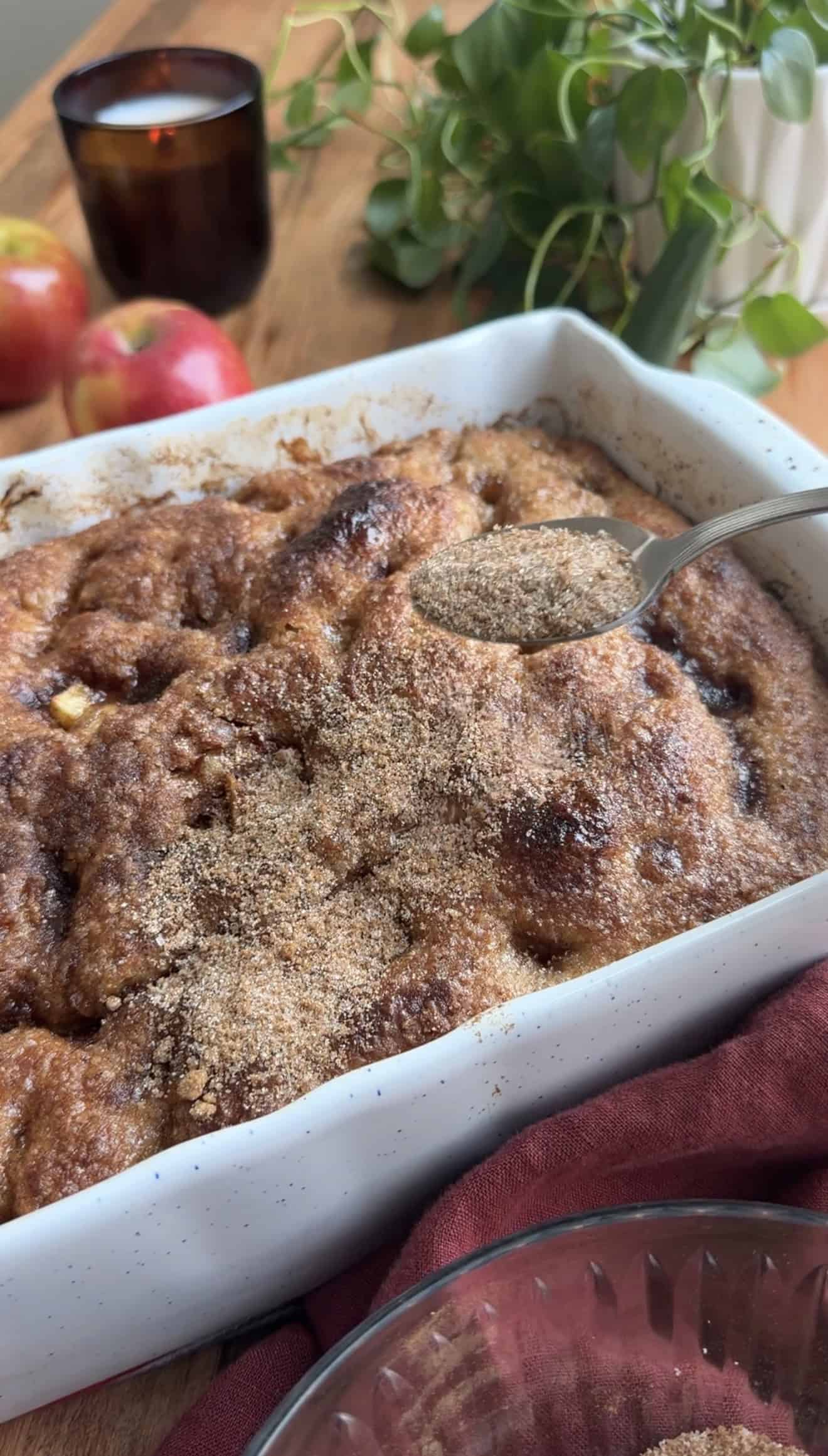
Focaccia Dimples Technique
Indent the dough with your fingers firmly, pressing all the way down until you feel the baking dish. Space the dimples about 1 inch apart, like you're playing the piano. Those little pools created in the dough hold onto the butter and sugar as it bakes, turning into pockets of caramelized goodness. This dimpling step also pops any uneven gas bubbles so the focaccia rises evenly in the oven.
My Tips for Cinnamon Sugar Focaccia with Apples
- Watch closely as the focaccia nears the end of the bake time, since the sugar on top browns quickly and can go from caramelized to burnt fast.
- Give the yeast a full 10 minutes to activate and get frothy before mixing it into the dough. If it doesn't foam up, your yeast may have expired, or the apple cider was too hot (which kills yeast) or too cold (which just slows it way down).
- Use 4 tablespoons of melted butter (or olive oil) to grease the baking dish. It sounds like a lot, but that's what it takes to keep the bread and caramelized sugar from sticking.
- Once baked, run a fork or spatula around the edges and underneath to release it cleanly for serving.
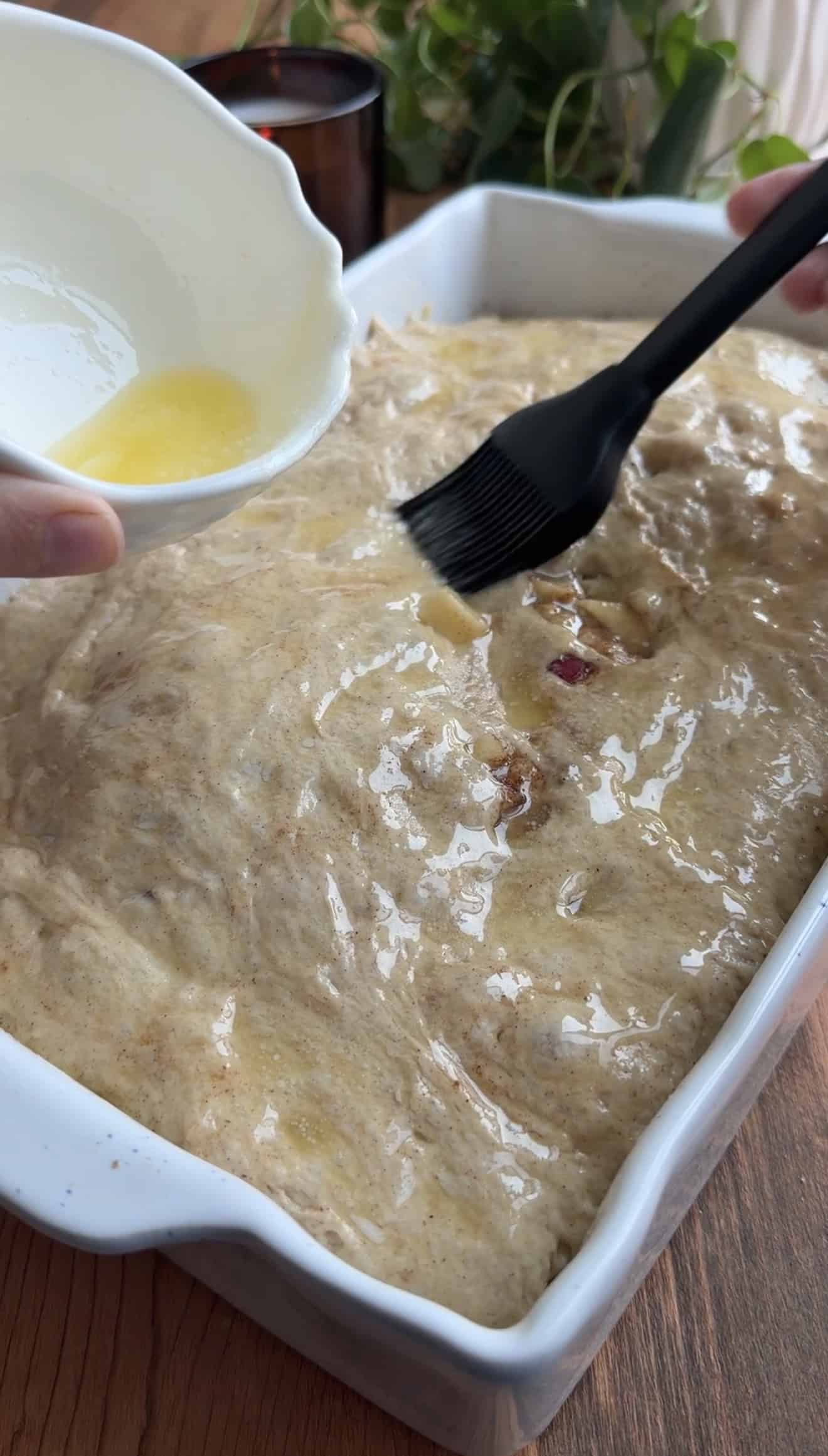
- For a topping that actually sticks to the bread, brush the dough with melted butter first so the initial sugar layer caramelizes onto it. Then add the final sprinkle of sugar while it's still hot, so it doesn't fall off the second you lift the first slice.
Apple Cider Donut Focaccia
developed & tested by:

Equipment
Ingredients
FOCACCIA DOUGH
- 2¼ teaspoons active dry yeast (one packet)
- ¼ cup brown sugar
- 1¾ cups warm apple cider (between 105-115°F or 40-46°C)
- 2 tablespoons olive oil
- 4 cups all purpose flour
- 1½ teaspoons salt (use fine sea salt or table salt)
- 2 teaspoons cinnamon
- 4 Tablespoons unsalted butter, melted (for greasing the baking dish)
FILLINGS & TOPPINGS
- ½ pound apples, diced (1 large or 2 medium apples; no need to peel them)
- ⅔ cup granulated sugar
- ⅓ cup brown sugar
- 2 teaspoons cinnamon
- ½ teaspoon nutmeg
- 1 teaspoon cardamom (optional)
- ¼ teaspoon salt
- 2 tablespoons unsalted butter, melted
Instructions
Mix, Stretch-and-Fold, and Rise
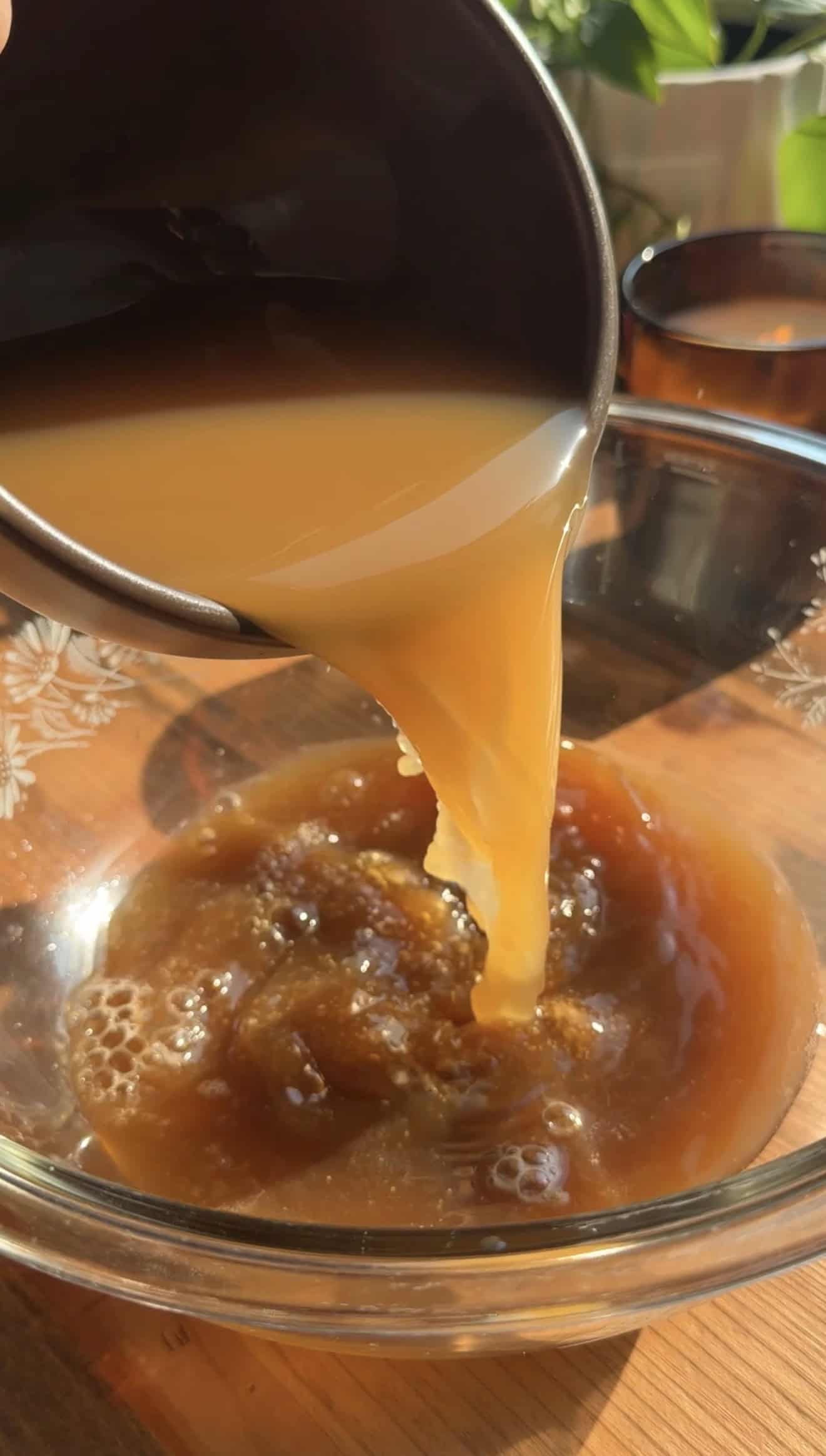
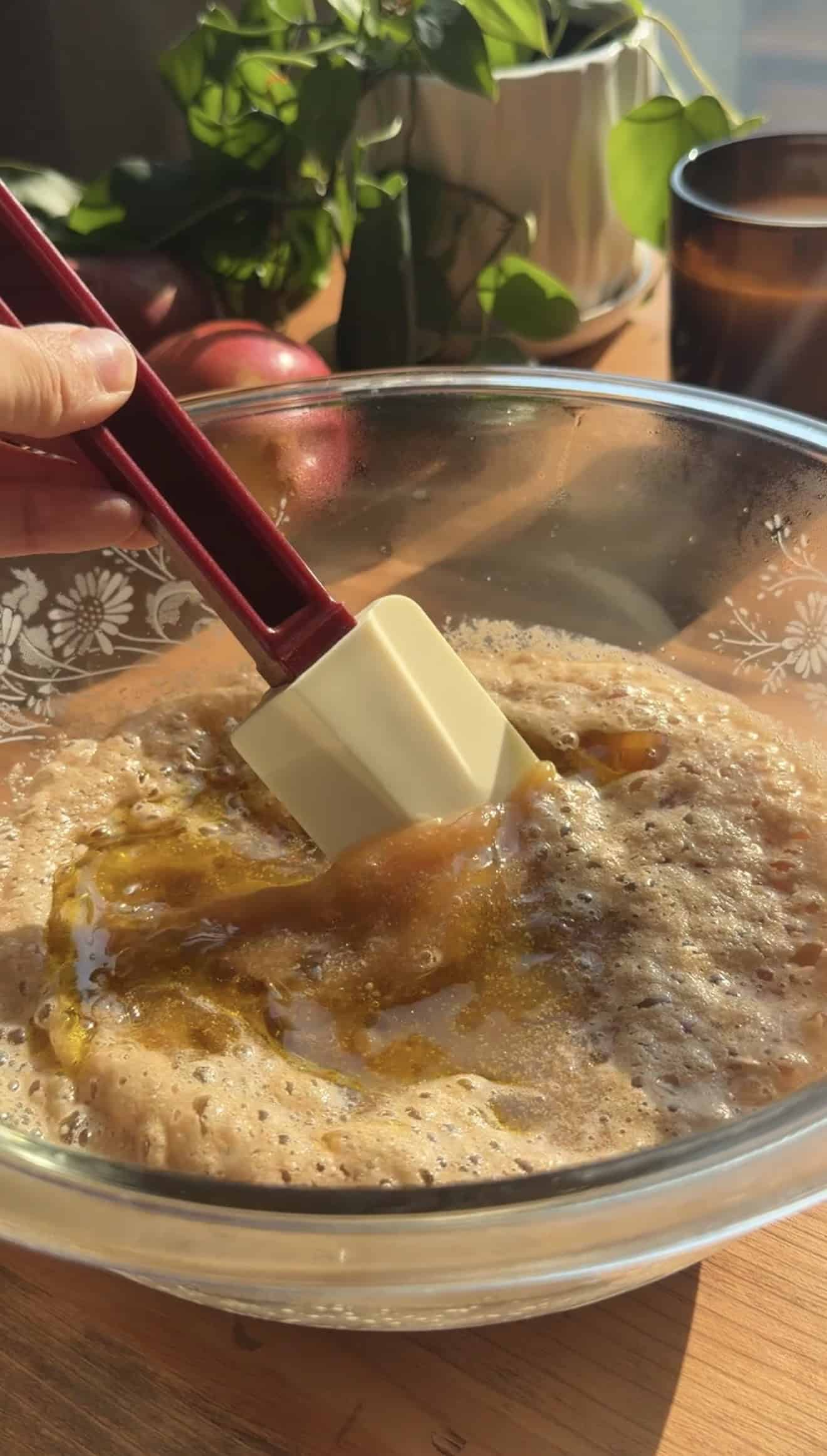
- In a large mixing bowl, whisk the yeast, brown sugar, and warm apple cider. Set aside for 10 minutes, until it's foamy on top. (If it's not foamy, check your yeast packet, as it might be expired.)
- Add the olive oil and stir it into the foamy yeast mixture.
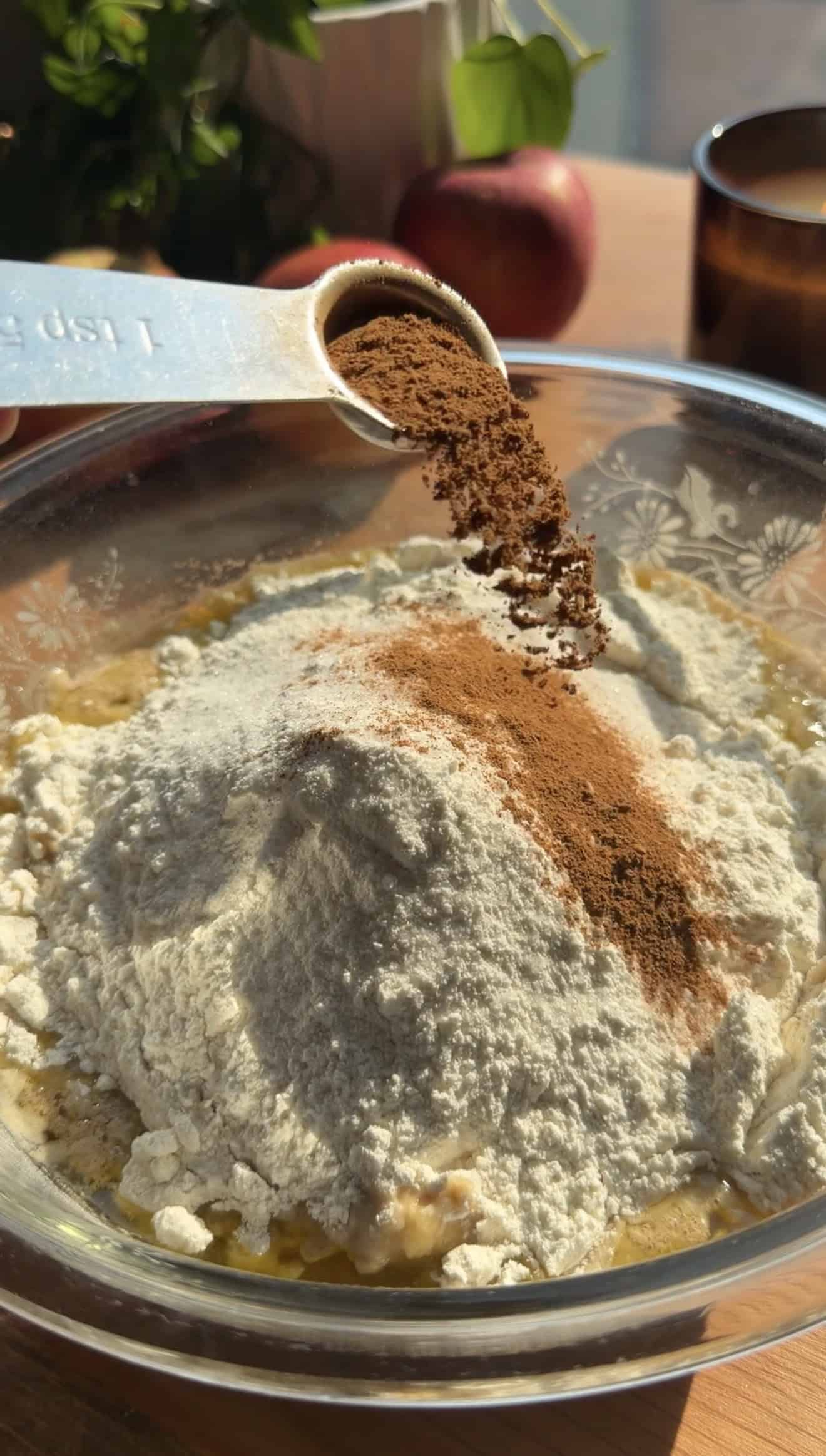
- Add the flour, salt, and cinnamon, and mix for a minute with a large wooden spoon or silicone spatula until it forms a soft, sticky dough.
- Cover the mixing bowl with plastic wrap or a kitchen towel for 30 minutes.
- Stretch and Fold 1: Use your hand to scoop a handful of dough from underneath, up one side, up out of the bowl as far as you can stretch it without tearing, then fold it over itself on top. Rotate the bowl 90 degrees and repeat another stretching of the dough up and folding over itself. Repeat rotating the bowl and stretching & folding the dough twice more, until you've completed four stretch-and-folds.
- Cover the mixing bowl with plastic wrap or a kitchen towel for 30 minutes.
- Stretch and Fold 2: Repeat the process for four stretch-and-folds. Cover the mixing bowl with plastic wrap or a kitchen towel for 30 minutes.
- Stretch and Fold 3: Repeat the process for four stretch-and-folds. Cover the mixing bowl with plastic wrap or a kitchen towel for 30 minutes.
- Stretch and Fold 4: Repeat the process for four stretch-and-folds. Cover the mixing bowl with plastic wrap or a kitchen towel for 1 hour until it doubles in size and looks bubbly on top.
Shape, Fill, and Proof
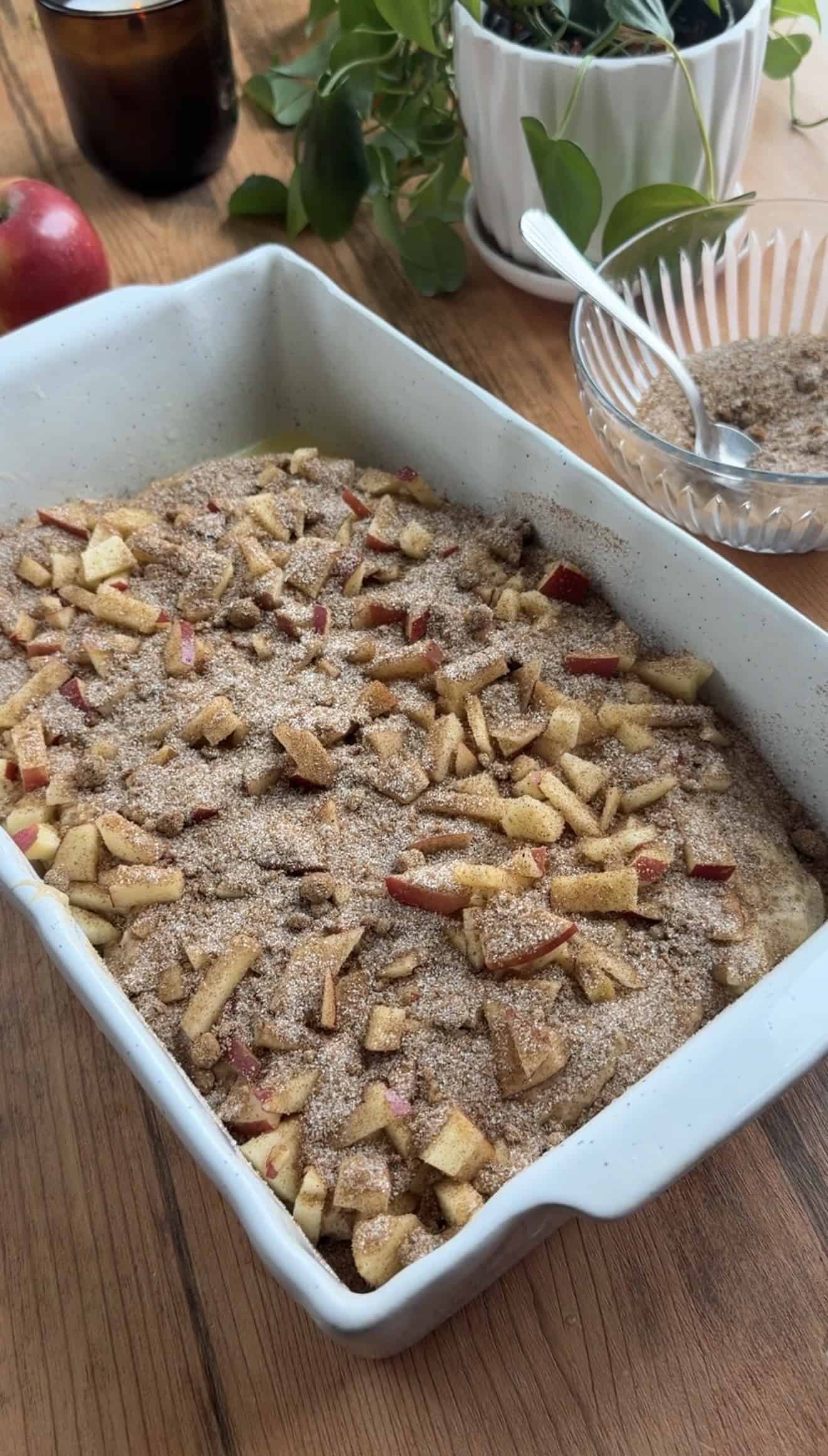
- In a small bowl, combine the granulated sugar, brown sugar, cinnamon, nutmeg, optional cardamom, and salt. Set aside.
- In a 9x13-inch baking dish, spread four tablespoons of melted butter on the bottom and up the sides.
- Dump the dough from your mixing bowl onto the center of the baking dish and press it down into all the edges and corners.
- Spread the diced apples over the dough, then sprinkle one-third of the cinnamon sugar (about ⅓ cup) on top.
- From a short end, lift up the dough and fold it in half. Then pick up the dough out of the dish, rotate it 90 degrees, and place it back down in the dish. Gently press it back out to fill all the edges.
- Cover the baking dish with plastic wrap and let it rise at room temperature for 2 hours, or until the dough has really puffed up and jiggles when you gently shake the baking dish.
Dimple, Bake, and Serve
- Preheat the oven to 450°F (230°C).
- Brush two tablespoons of melted butter over the top of the dough. Sprinkle one-third of the cinnamon sugar (about ⅓ cup) on top.
- Generously coat your fingers in a little extra melted butter or olive oil (don't skip this, or else the dough will stick all over your fingers.) Use your fingers to press dimples into the dough, pressing all the way to the bottom of the baking dish.
- Bake for 18-20 minutes, or until the focaccia is puffed up and golden. Immediately sprinkle the remaining cinnamon sugar over the bread, and allow it to cool for at least 20 minutes before slicing.
Notes
- Apples: Stick with apples that hold their shape when baked, like Granny Smith, Honeycrisp, Fuji, Braeburn, or Jonagold, so you get tender bites instead of mush.
- Overnight Rise: I like making this same-day so it's ready by mid-afternoon for a sweet treat, but it also works overnight in the fridge. Mix the dough, then let it sit at room temperature for 1-2 hours to get fermentation started before moving it to the fridge for 8-12 hours (it should double in size). From there, continue with the rest of the recipe, but let it proof for 3-4 hours instead of 2, since the dough needs extra time to warm back up.
- Sticky Dough: Expect the dough to feel sticky, which is on purpose. The high hydration is what gives you those big, airy pockets in the crumb. When doing stretch and folds, wet your hands with cold water first so the dough doesn't stick to you as much.
- Storing: Store fully cooled leftovers in an airtight container at room temperature for up to 2 days, or in the fridge for up to 5 days. The topping will soften & moisten slightly over time. Reheat for about 20 seconds in the microwave to soften and warm it.
- Cool First: I know it's tempting to cut into the bread right away, but it continues cooking after it's pulled from the oven. If you slice it too soon, you'll end up with gummy bread.
Nutrition
This website uses affiliate links which may earn commission for purchases made at no additional cost to you.

Amanda says
Just made this yesterday, it was so good! It was time consuming with the proving, but fairly straight forward! It was my first time making any type of bread and I'm so pleased at how it turned out!
Carissa Erzen says
Hi Amanda, thank you so much for your review, I'm so glad you enjoyed this focaccia! It's one of my fall favorites for sure. And yes, this slow rise bread definitely takes time, and I think the flavor payoff is so worth it! I have other types of bread recipes on my site that don't require quite as long rise and proof times, if you're interested (: Happy baking!
river says
my apple cider and dry instant yeast doesn't foam, i used a thermometer to make sure its at 43deg celcius and its a new pack of dry instant yeast (expiry date jan 2027). unsure what went wrong, please help
Carissa Erzen says
Hi there, I'm so sorry to hear that it's not foaming up! If you're using instant yeast, it won't foam up as much as my step-by-step photo, since I use active dry yeast. Instant yeast should just get a fine layer of fizz on the top after about 10 minutes. What did yours look like?
Cathy says
I made this recipe for the first time yesterday as a dessert for a family dinner and I couldn’t have been happier with the result. Everyone loved it! I followed the recipe exactly, except for using a 330ml bottle of apple cider which is a little less fluid than the stated recipe - but it was all I had and I crossed my fingers! I have almost no experience with making breads or doughs, so to end up with a delicious fluffy tray of apple-y donut-ty goodness was very exciting. Thank you!
Carissa Erzen says
Hi Cathy, I'm so glad your family loved your apple cider donut focaccia! Thank you so much for your sweet review!
Cass says
I followed this recipe to a T but the dough is so sticky and wet it's impossible to stretch and fold in the ways described. I did the overnight rise and after adding the apples/cinn sugar layer it was a disaster trying to fold in half and turn.
I used a measuring scale for flour. Do you scoop to measure? Any tips for next time? I'll definitely try it again.
Carissa Erzen says
Hi Cass, I'm so sorry to hear that! The dough stays in the bowl during the stretch and folds, and if it feels really sticky, you can first wet your hands with water or rub a little olive oil on them. If you did the overnight rise in the fridge though, you could skip the stretch-and-folds, since that's more to develop gluten faster with a same-day rise. I also use a kitchen scale for my flour, I find it's more accurate, so we're on track there! If you want to give it another go, I'd stick with either the overnight rise (and skip the stretch and folds) or make it same-day and wet or oil your hands for each round of stretch and folds. I hope that helps, and if you have any more questions, please let me know!
Prott says
I want to make this using the overnight rise so it can be ready at 10 am. You say to Mix the dough, let sit, refrigerate, then Continue with the rest of the recipe. Continue from what point? When do the Stretch & Folds take place - during the Mix stage or during the Continue stage? Do you think I could fully make it and immediately refrigerate it for its final rise instead of the final two hour rise that is at room temperature? Thanks!
Carissa Erzen says
Hello, if you're letting the dough rise overnight in the fridge, you'd continue from the "Shape, Fill, and Proof" section, skipping all of the stretch-and-folds. You can mix the dough then immediately refrigerate it, but it'll need to rise closer to 12 or even 14 hours if you don't let it sit out for 1-2 hours at room temp before placing it in the fridge. I hope that helps, and I'd love to know how yours turns out!
Cath says
Hi! For the overnight instructions, would I still need to stretch and fold 4 times the day of baking? thanks!
Carissa Erzen says
Hi Cath, if you let it rise overnight in the fridge, you can skip the stretch-and-folds completely! Just let it proof an extra 1-2 hours once it's in the baking dish. Happy Baking!
Wendy G says
If i have apple cider syrup, can this replace the cider or should i reconstitute the syrup? Thanks! Excited to try the recipe this week.
Carissa Erzen says
Hi Wendy! I haven't tested this recipe with syrup in place of apple cider, but I think it'll make the bread too sweet and possible inhibit the rise of the dough. Apple juice also works if you don't have apple cider!
Marylou says
Question: Where does the ¼ teaspoon salt come in? Is it added to the spices and sugars for the filling?
Carissa Erzen says
Hi Marylou, yes it gets added in step #1 of the filling with all the sugars and spices. Thanks for catching that, I'm updating it in the recipe card right now!
Laurie Brauss says
Hi!
I am in the process of making this and accidentally mixed the apples IN with the sugar mix. Did I blow it? ☹️
Carissa Erzen says
Hi Laurie, how did your focaccia turn out? Hopefully it still baked up okay!
Laura Schulz says
can this be made with sourdough starter instead of the yeast?
Carissa Erzen says
Hi there! I personally haven't made it with sourdough, but a couple people have swapped it in with success! They used 100 grams sourdough starter in place of active dry yeast, then reduced the water by 60 grams and the flour by 60 grams from the dough. I'd love to know how yours turns out!
BakerBoy says
Started to make this recipe but noticed a mistake immediately. Recipe calls for warm apple cider, but the instructions say to proof yeast in warm water (but don't specify how much warm water). Will pivot to another recipe since this isn't clear.
Carissa Erzen says
Thanks so much for catching that and letting me know! I've fixed the recipe card so it specifies to add the warm apple cider. Water works too, but it won't taste as fruity or sweet. (:
Marcie Murray says
I don't know what I did wrong. I found the directions exactly. the dough was very very loose it was not able to turn it or do any real stretch and folds.
Do you scoop your flower or do you spoon your flour. I did add more flour but maybe not enough
Carissa Erzen says
Hi Marcie! I'm so sorry to hear that!! The dough should feel sticky/tacky since it has a high hydration. I prefer to measure my flour to get it as accurately measured as possible, and I don't add any additional flour during the stretch-and-folds. The dough should stay in the bowl during all the stretch-and-folds, so even if it's loose, you should still be able to handle it. I hope that helps!
Nicole says
Super delicious! Easy recipe to follow. My edges turned out wonderful but my center stayed gooey. Will have to try it again to try to get the center to bake through without burning the edges
Carissa Erzen says
Hi Nicole, I'm so glad it still turned out delicious for you even with a gooey center! I wonder what type of pan you used? I find that with a metal pan, the sugary edges get caramelized and dark before the middle finishes baking, since metal runs hotter. I recommend using a ceramic or glass baking dish for this sweet focaccia. And if you've got a kitchen thermometer, that always helps to make sure the center of your bread reaches at least 190F before pulling it from the oven. I hope that helps!
Natalie says
Can this be made with bread flour or do you only recommend using AP flour? I’ve made focaccia recipes in the past that use them interchangeably but I know it can impact the structure of the bread due to the higher protein content.
Carissa Erzen says
Hi Natalie, this one works with both, I tested it with bread flour too and it still bakes up fluffy inside. Happy baking!
Meherunnisa Khan says
We don’t have apple cider where we live ;is there a substitute or recipe to make it?
Carissa Erzen says
Hi there, apple juice also works!
aaron ferguson says
This is soooo good. Didn't have ice cream, wished I had ice cream. Pretty much followed recipe 100%. So crunchy, yet soft. Used crazy crisp apples or something like that. They were nice and hot, and still had their "crisp". My wife said "you could sell this for $12 a slice." problem is that 12-14 slices take 5 hours.
Carissa Erzen says
Hi Aaron, thank you so much for your kind review! The ice cream is optional but also necessary at the same time lol It does take time, but most of it is hands-off, which is nice. So glad you enjoyed this one!