

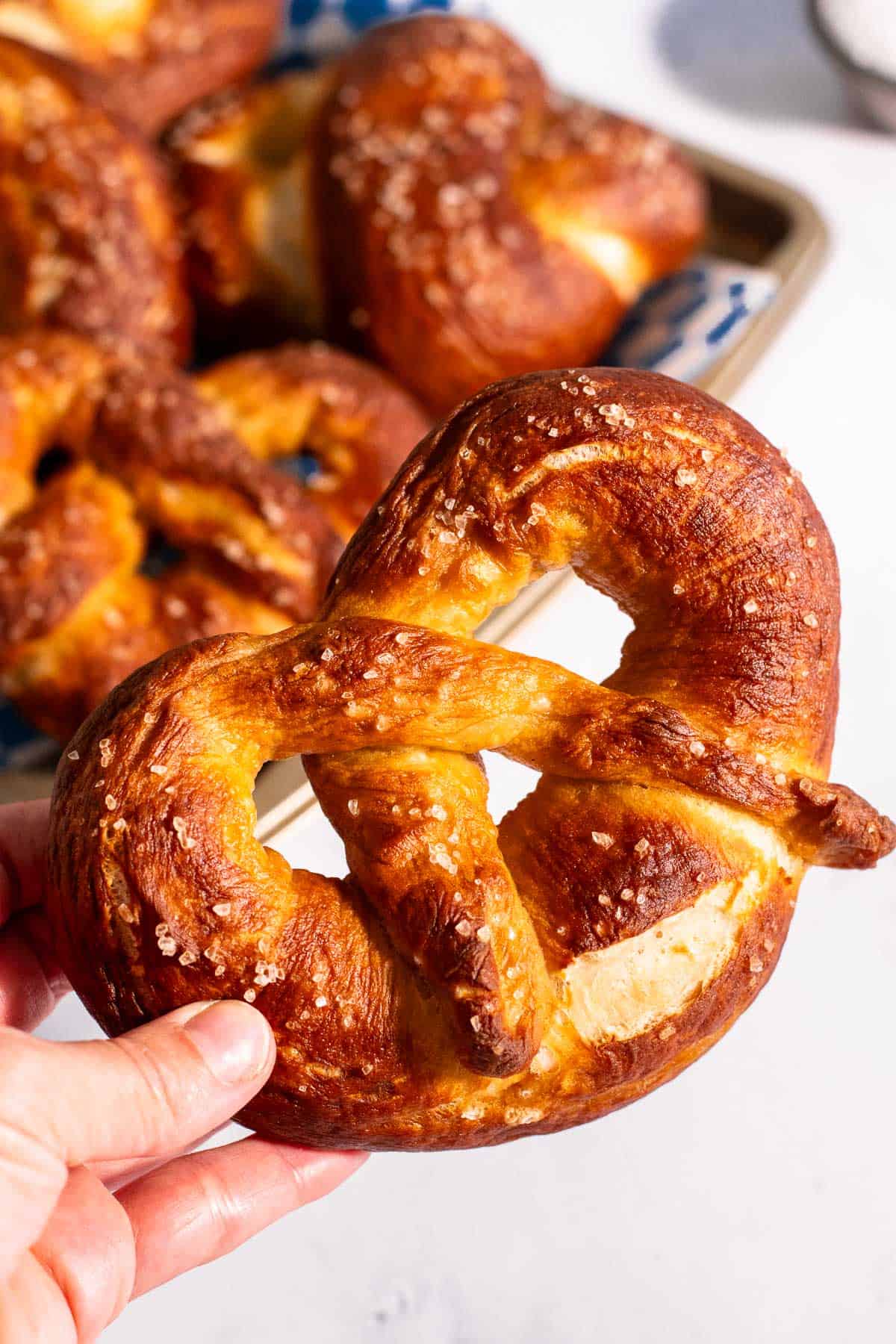
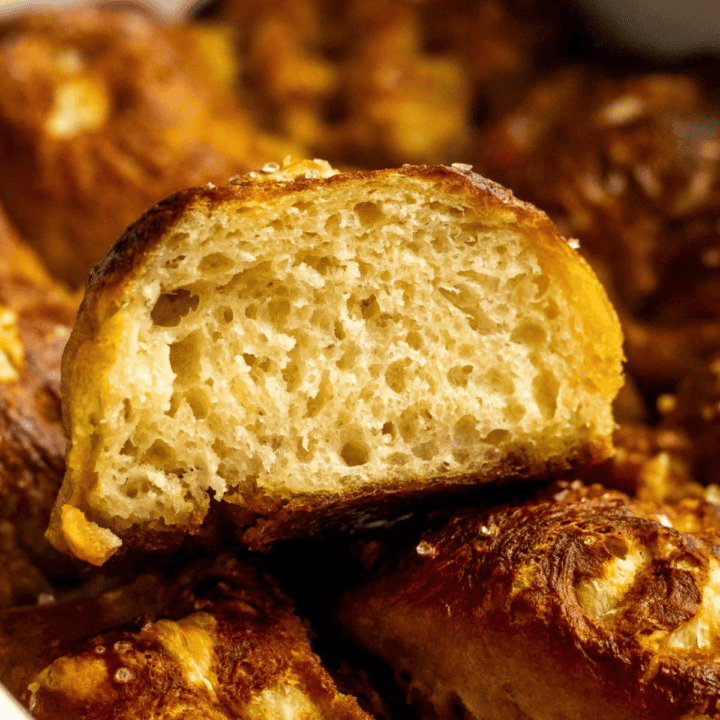
These German pretzels are made with melted butter and a little brown sugar mixed into the yeast dough, to ensure they stay soft after baking. And while they're shaped and scored like Bavarian Brezeln, a simple baking soda bath replaces the traditional lye solution to keep things simple.
Featured Review
"Very authentic and tasty, so good!" -Lina
The Best Soft Pretzels are German Pretzels
Growing up in Germany, I fell head-over-heels for gigantic, soft German pretzels. My sister and I split one at pretty much every weekend market. But let's get one thing straight: these are not Auntie Anne's. Laugenbrezel are deeper in color and richer in that tangy, yeast flavor. Chewy on the outside, pillowy on the inside. Ugh I'm getting nostalgic just typing this.
The signature mahogany, chewy crust comes from dipping the dough in a lye solution before baking. But I have a toddler wrapped around my legs most of the time I'm in the kitchen, so a caustic solution that can burn skin on contact was a hard pass for me (Fight Club fans will know what I'm talking about).
So I tested this recipe more times than I'll admit, determined to find a way around it. Turns out, boiling the pretzels in water with a larger quantity of baking soda than most other recipes call for gets you the same deep color, tangy flavor, and chewy bite as the lye method, just without the gloves, fumes, potential bitterness, or uneven browning. And the boil is what "sets" the crust before it hits the oven, so you get that classic thin, chewy shell instead of something tough or pale.
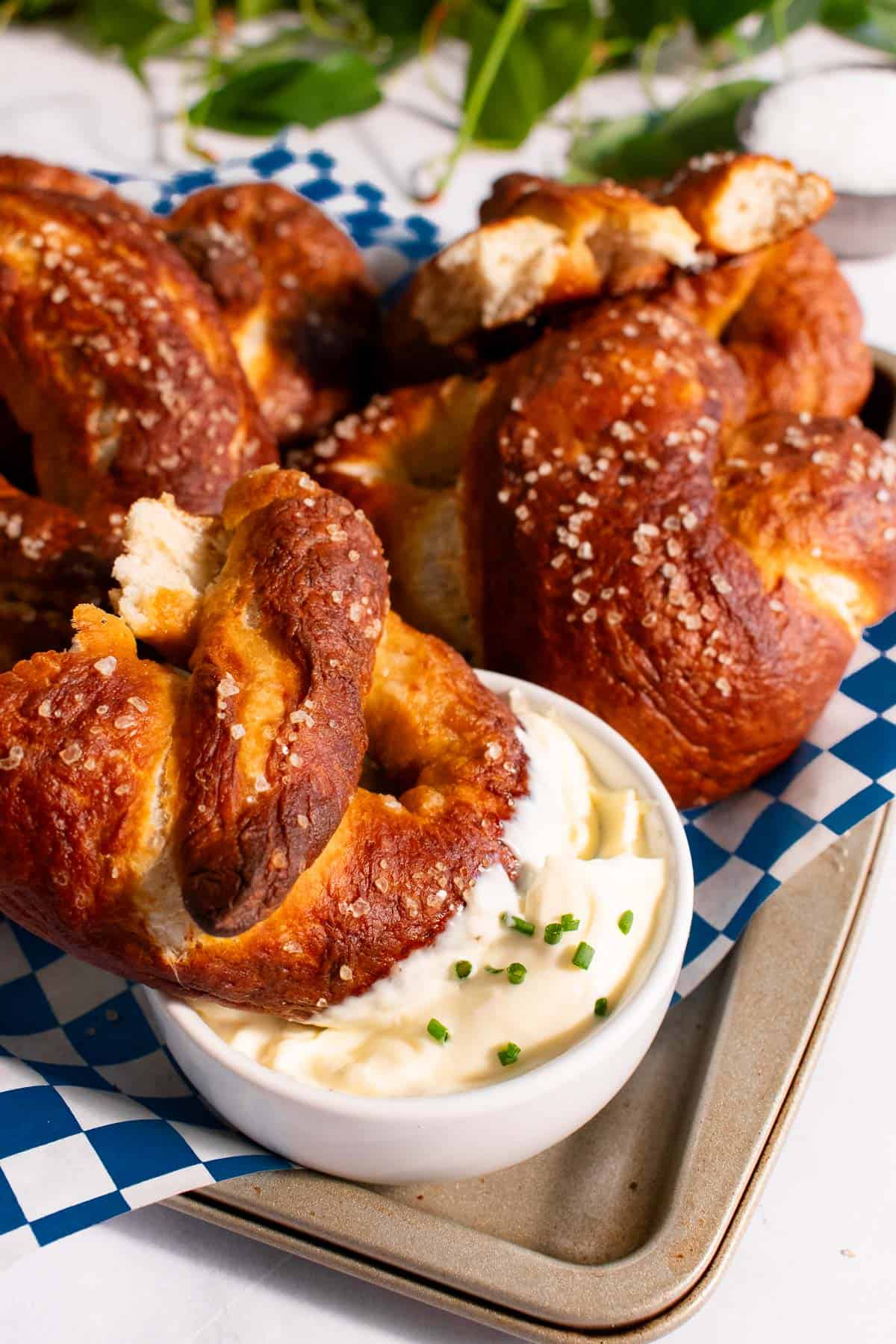
These are flavorful enough to eat plain, or slather them in salted butter for Butterbrezeln (my personal love language), or tear them apart to drag through a German cheese dip called Obatzda. On that note, my cinnamon pretzels use this exact same dough, then get coated in melted butter & cinnamon sugar for a sweeter take. And for another way to put your pretzel-making skills to good use, my pretzel hot dog buns are definitely your next stop for Oktoberfest and cookouts.
Let's Make Soft German Pretzels Together!




I kept this pretzel dough simple, with just a handful of pantry staples. And while instant yeast achieves a quicker rise, you can swap in active dry yeast, bloomed with the brown sugar & warm water before mixing into the flour & salt.
My Tips for Baking Bavarian Pretzels
- The pretzels I grew up eating were bigger than my face, so if you're going for that German-market-look, this recipe doubles easily. Still shape eight pretzels, they'll just end up twice as large.
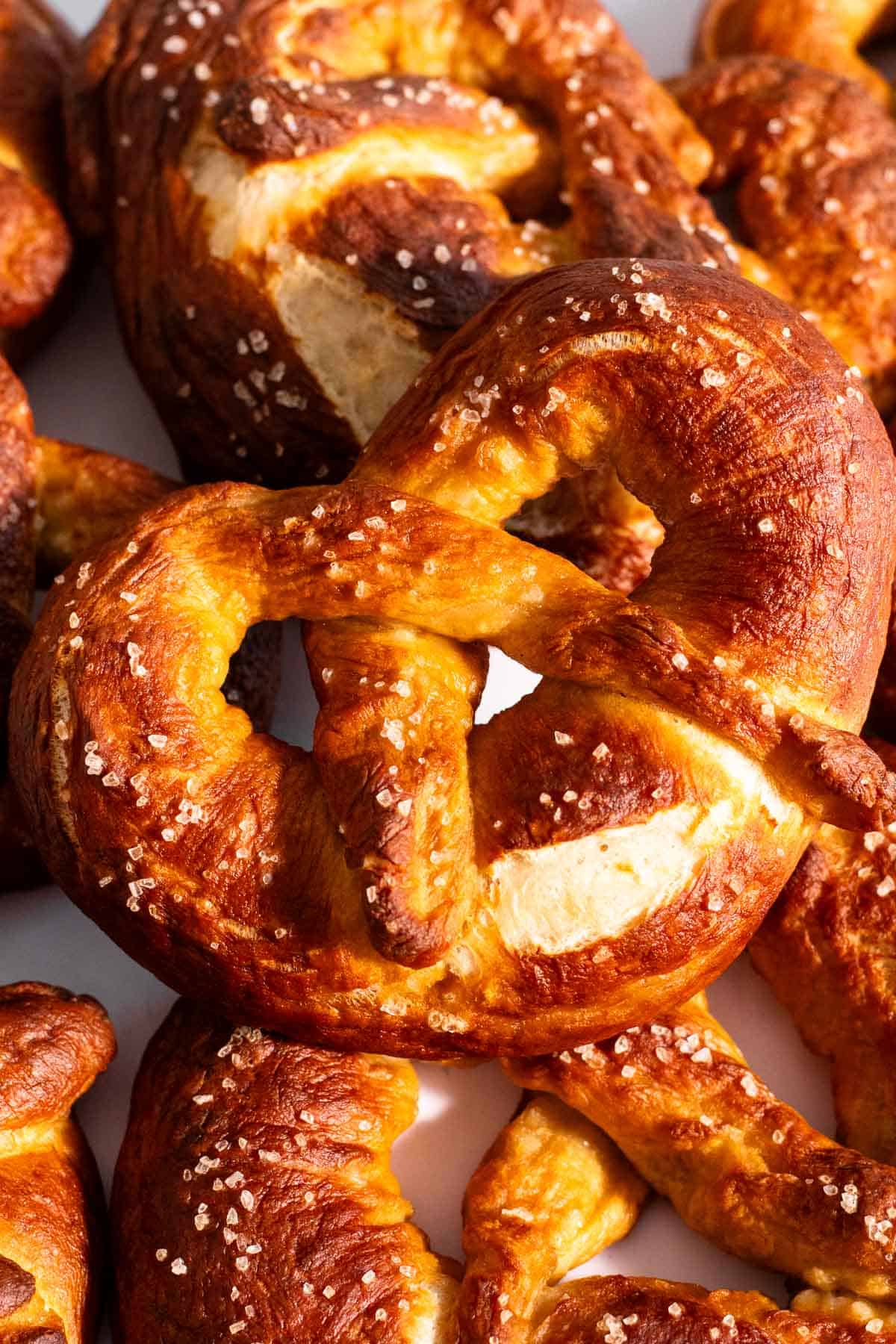
- Bavarian Brezeln traditionally have a really thick belly that's scored before baking so it opens up in the oven, while the arms are thin and crispy. I love the texture variation here, which you can get by rolling the ends of your dough strands thinner, while keeping the middle thicker.
- Using pretzel salt or extra coarse salt is nonnegotiable, since anything else (including kosher salt) dissolves into the hot dough. I get my pretzel salt online.
- Most traditional pretzels are made with a double twist in the middle, but I prefer the easier single-twist method, and I've never had an issue with mine unraveling while they're boiling. Just make sure you add a little water to get the arms to stick on the belly, if there's too much flour on the surface.

Easy German Pretzels (Without Lye)
developed & tested by:

Equipment
Ingredients
Dough
- 4 cups all purpose flour
- 2¼ teaspoons instant yeast
- 1 Tablespoon dark brown sugar
- 2 teaspoons salt (use table salt or fine sea salt)
- 1¼ cups warm water (between 105-115°F or 40-46°C)
- 4 Tablespoons unsalted butter, melted
Baking Soda Bath
- 10 cups water
- ½ cup baking soda
Topping
- 2 teaspoons pretzel salt
Instructions
Mix the Dough & Let it Rise
- In a large bowl, mix the flour, instant yeast, brown sugar, and salt together.
- Add the warm water and melted butter to the flour mixture. Knead the mixture in the bowl until it forms a shaggy dough.
- Lightly flour a clean work surface. Knead the dough on the work surface until it forms a smooth dough, after about 8 by hand, or about 5-6 minutes in a stand mixer with a dough hook attachment. Form the dough into a ball.
- Lightly oil a clean mixing bowl with a little olive oil or butter. Place the dough ball in the oiled bowl and cover with a damp dishcloth or dinner plate until the dough doubles in size, after about 2 hours.
Shape the Pretzels
- Preheat the oven to 425°F. Generously grease a baking sheet or line it with a silicone baking mat. (Don't use parchment paper, which will stick to the pretzels.)
- Bring 10 cups of water and the baking soda to a boil on the stove on high heat.
- On a clean work surface, divide the dough into 8 equal portions. Keep the dough covered with a kitchen towel as you shape the pretzels, so it doesn't dry out.
- Roll one portion of dough on your counter to about 24 inches in length, using even pressure between your hands.
- Hold the two ends in each hand, and form a large U-shape with the dough log. Cross the two ends and bring them down towards the curve of the U-shape. Let about an inch of dough hang over the edge of the U-shape. Gently press the two ends into the dough, about 3-inches (8cm) apart. Repeat shaping the remaining dough, arranging them on your prepared baking sheet as you go.
Boil and Bake the Pretzels
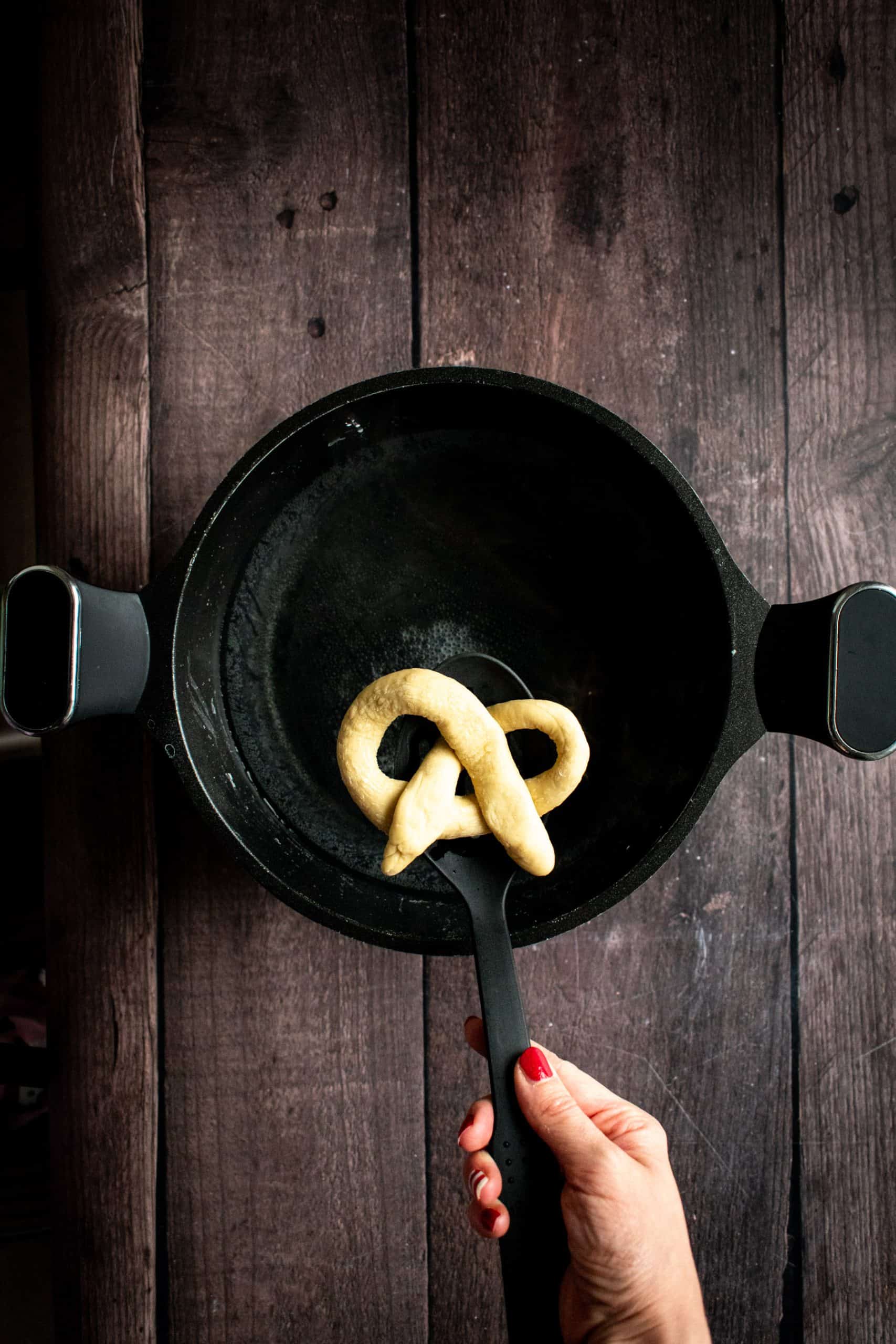
- Gently lower the first two pretzels into the boiling baking soda and water. Boil for 30 seconds, then turn them over and boil on the second side for another 30 seconds. Use a slotted spoon to remove the pretzels from the pot, gently tapping the spoon on the pot a couple times to get rid of extra water on the dough, then place them back on your prepared baking sheet. Repeat with the remaining pretzels, boiling batches of two at a time.
- While the pretzels are still wet, sprinkle the pretzel salt evenly on top.
- Bake for 12-15 minutes, until the pretzels are deep brown.
Notes
- Pretzel Salt: The best salt to use for pretzels is coarse salt or pretzel salt. This salt is thicker than kosher salt, and it won't melt in the oven or dissolve on the surface of the pretzels. If you can't find coarse salt, you can use kosher salt in a pinch, but the salt granules will dissolve on leftover pretzels after about a day.
- Forming Your Pretzels: Make sure the ends of your twisted pretzel are pressed down firmly into the belly of the pretzel. Otherwise, it could unravel in the boiling water. If it's not sticking, add a little water to help stick the pretzel together.
- Topping: Immediately sprinkle coarse salt on the pretzels once they're done boiling. The salt will stick while they're still wet, but it'll just slide right off if they dry out.
- Storing: These homemade pretzels taste best when they're fresh, on the same day they're baked. Store fully cooled pretzels at room temperature in a paper bag or wrapped in a kitchen towel for up to 3 days, since an airtight container will make the salt dissolve into the crust.


Lina says
Very authentic and tasty, so good!
Carissa Erzen says
Thank you so much, Lina!
Ricki Eltzroth says
Perfect piece of work you have done, this web site is really cool with wonderful info .